The Secret to Getting Kids Excited About Chores Using Dopamine
Have you ever wondered: Why do we adults feel incredibly satisfied when we can cross off (check) a completed item on our to-do list? That feeling is relieving and exhilarating, isn't it?
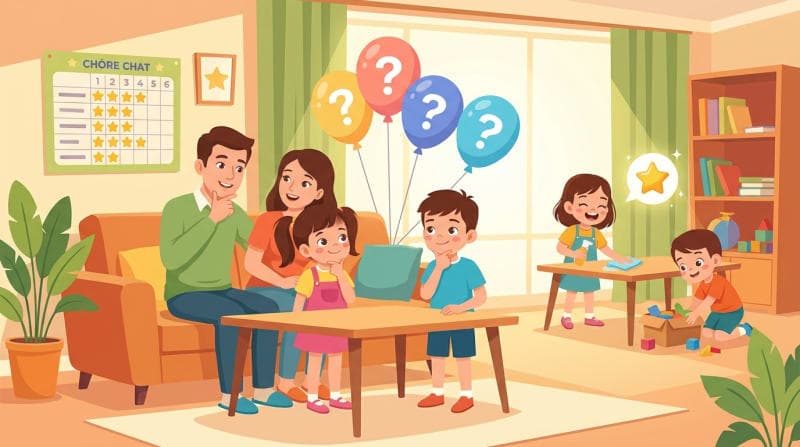
Conversely, why is it that when chores are mentioned, children often appear sluggish, procrastinate, or even resist? Is the child simply lazy?
The answer does not lie in the child's personality, but in the brain's operating mechanism. Science has proven that excitement or boredom is strongly governed by a hormone called Dopamine.
In this article, let's join Tasky Kid in discovering the secret of Dopamine and how parents can apply behavioral psychology to turn chores into a daily joy for their children.
1. Dopamine: The "Fuel" of Motivation and Joy
Before diving into solutions, we need to clearly understand the "main character" in this story: Dopamine.
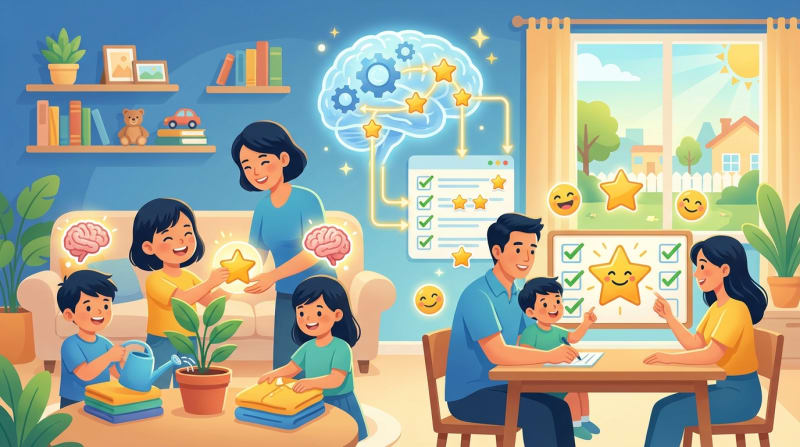
Dopamine is often called the "happiness hormone" or the "reward hormone." When we complete a specific task, the brain releases this neurotransmitter. It creates a feeling of pleasure, achievement, and most importantly, compels humans to repeat that action to receive more emotional rewards.
This is exactly why children (and adults too) are often easily addicted to video games. In games, tasks are always clear, short-term, and rewards (leveling up, getting coins, the "ding" sounds) appear immediately. The child's brain is constantly "bathed" in Dopamine.
In contrast, chores are often tedious, prolonged, and the reward (a clean house) is not immediate. So how do we "hack" the brain to help children find joy in labor just like when playing games?
2. The Classic Parenting Mistake: "Giant" Commands
Let's recall how we usually assign tasks to our children. do parents often say things like:
- "You must be good!"

- "Clean your room right now!"
- "Why is this stuff so messy? Clean it all up!"
From the perspective of child psychology, these are commands that are too vast and abstract.
When a child's brain receives the request "Clean the room," it visualizes a massive amount of work: Books, clothes, toys, trash... The child doesn't know where to start or when it will end. Without a clear "finish line," the brain develops feelings of intimidation and anxiety, leading to procrastination.
More importantly, because the task is so large, it takes a long time to finish. This means the flow of Dopamine is blocked, and the child doesn't have the opportunity for their brain to "celebrate" small victories in time.
3. Expert Solution: The Art of "Micro-Goals"
To activate the brain's reward mechanism, the secret lies in specifying and breaking down tasks. Instead of giving a general command, turn it into a series of small actions that are easy to perform and yield immediate results.
Real-world Example:
Instead of saying "Clean your room", parents should try breaking it down into tasks on the Tasky Kid app or a chore board:
- Task 1: Stack 2 pillows at the head of the bed. (Takes 10 seconds - Done! ✅ -> Dopamine appears).
- Task 2: Put 5 toy cars into the basket. (Takes 30 seconds - Done! ✅ -> Dopamine appears).
- Task 3: Put dirty clothes in the washing machine. (Takes 1 minute - Done! ✅ -> Dopamine appears).
Why is this method effective?
- Reduces pressure: Small tasks look very easy, making the child no longer feel "intimidated."
- Creates winning momentum: When completing the first task (stacking pillows), the sense of achievement drives the child to do the second task.
- Reinforces behavior: Each completion is a time the brain remembers: "Working -> Happiness". Gradually, the habit of working is formed naturally.
4. Tasky Kid - A Powerful Tool Helping Parents Apply Behavioral Psychology
Understanding this mechanism, Tasky Kid is not just a scheduling app, but is designed as a fun game to help parents manage and encourage their children.
Turning Chores into "Small Victories"
On the Tasky Kid app, parents can easily set up small tasks with vivid illustrations. When the child completes the task of "Putting away 5 toy cars", they get to press the complete button on the screen themselves.
Visual Rewards - Lucky Stars ⭐
As soon as the child presses complete, the app acknowledges it and immediately awards a star or badge. The fun sound and the image of the star flying up is precisely when Dopamine explodes.
The child works not because they are forced, but to hunt for "stars," to accumulate points to exchange for real rewards that parents have set up (like 30 minutes of TV, a trip to get ice cream, or a favorite toy).
Building Confidence and Independence
Through accumulating small victories every day, children will build belief in their own abilities (Self-efficacy). The child understands: "I can complete tasks", "I am useful to the family". This is a solid foundation for independence and discipline later on.
5. Conclusion
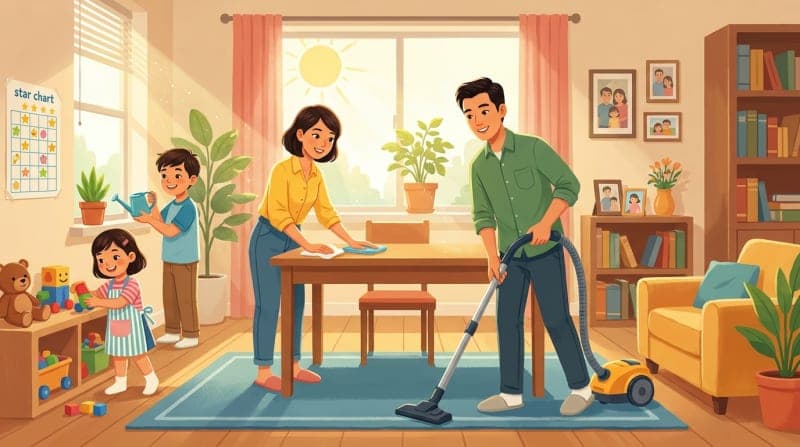
Teaching children to do chores is not a battle, but the art of understanding psychology. By understanding Dopamine and applying the tactic of breaking down goals, parents can completely turn stressful cleaning hours into fun and educational times.
Don't let your child feel lost in vague commands. Start breaking down chores and celebrating every small victory with your child today!
👉 Are you ready to turn chores into joy for your child? Download the Tasky Kid app now and start the journey of sowing positive habits for your child at: https://taskykid.com
Tasky Kid - Accompanying parents in building the future for children.