Weekend Chore Ideas: Fostering Independence in Kids by Age Group
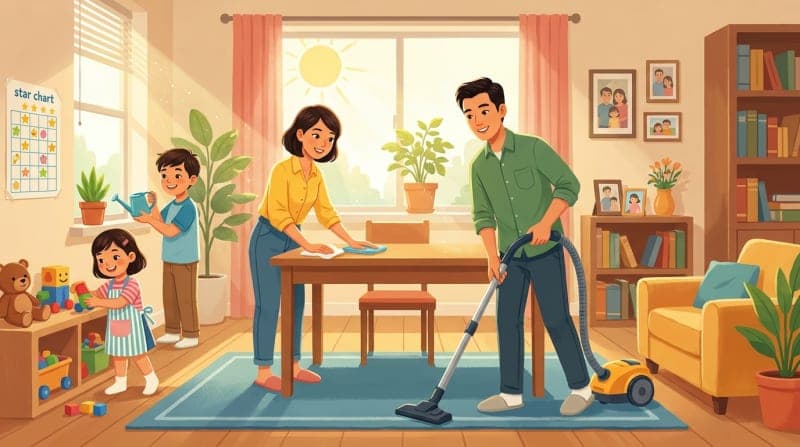
Weekends are usually the time when parents hope to rest after a stressful work week. However, this is also when the house gets the messiest as all family members are at home. Instead of parents getting "frazzled" cleaning alone while the kids are glued to phone screens or the TV, why don't we turn the weekend into an exciting "life skills training course"?
A relaxed weekend is the golden time for parents to guide their children in doing tasks that require more time and meticulousness than usual. Not only does it keep the living space tidy, but reasonably dividing housework is also an excellent way for kids to practice patience, dexterity, and a sense of responsibility.
Below is a detailed handbook to help parents "upgrade" their child's skills through age-appropriate chores, turning cleaning into family bonding fun.
Why assign chores according to age?
Many parents often make a mistake: either assigning tasks that are too difficult, causing the child to give up, or assigning tasks that are too easy, making the child feel bored. The key to teaching independence lies in assigning tasks that are "just right".
When a task fits the child's physical and mental development, they will feel confident upon completion. Conversely, small challenges will stimulate interest and the child's desire to prove themselves.
1. The "Preschool" Group (3-5 years old): Learning through play
At this stage, the child's world revolves around observing and mimicking adults. They love being "grown-ups" and helping their parents. Don't underestimate those little hands; their enthusiasm is boundless!
Suggested weekend chores:
Sorting clothes before washing: This is a great lesson in colors and logical thinking. Dump the pile of clothes out and play "find the teammate" with your child. The child will pick out white clothes and colored clothes into two different baskets. Parents can combine this with teaching the child to count the number of items to make it more interesting.
#TaskyKid#KyNangSong#DayConTuLap#ViecNhaCuoiTuan
🌟 Скачать Tasky Kid сейчас
Помогите ребенку выработать хорошие привычки с приложением для управления делами!
Wiping low shelves or toy cabinets: With a small damp cloth that fits their hand, the child can wipe dust off low places like the TV shelf, coffee table, or their own toy cabinet. This helps practice fine motor skills and awareness of preserving personal belongings.
Arranging shoes on the doorstep: Guide the child on how to match the left and right shoes and arrange them neatly in a straight line. This is an extremely important routine to practice early on.
💡 Tip for parents: Don't be too much of a perfectionist about cleanliness. The goal here is to build the habit of loving labor. Praise your child a lot after every small action.
2. The "Primary School" Group (6-10 years old): Honing dexterity and meticulousness
Entering primary school age, children's gross and fine motor skills have developed better. They also begin to understand processes and responsibilities more clearly. This is when parents need to show trust by assigning slightly more complex tasks.
Suggested weekend chores:
Changing bed sheets and pillowcases: Weekend is the time to put "new clothes" on the bed. This job requires coordination (pulling sheet corners, inserting pillow inserts). Initially, parents should work with the child, showing them how to tuck the blanket corners so they are smooth. The feeling of lying on a fresh bed cleaned by their own hands will make the child very proud.
Preparing books and clothes for the new week: To avoid the Monday morning rush, teach your child the habit of preparing from Sunday. They need to check the timetable, arrange books in their bag, and choose the uniform they will wear. This planning skill will stay with them for life.
Vacuuming the living room or bedroom: Using a vacuum cleaner is an interesting experience for children of this age. Teach your child how to move the machine safely and vacuum all the nooks and crannies.
💡 Tip for parents: Be patient in guiding the technique. If the child doesn't do it well, gently demonstrate it again instead of criticizing. Encouragement will make them want to do better next time.
3. The "Teenager" Group (11-15 years old): Delegating management power
When children enter their teenage years, the desire to assert independence rises strongly. If parents just "order them around" with petty tasks, children easily develop a rebellious mindset. The secret is to upgrade the child's role from "executor" to "manager" of a specific task.
Suggested weekend chores:
Planning the menu or helping prep meals: Let your child decide the dish for Sunday lunch or participate in prepping vegetables and marinating meat. Cooking is the most basic survival skill that every child needs before adulthood.
Scrubbing the bathroom sink or mirror: This is a job that requires strength and attention to detail. Guide your child on how to use safe cleaning agents and how to clean glass and porcelain surfaces.
Sorting recyclables: Educate your child about the environment through sorting plastic waste, paper, and organic waste. They can be responsible for taking recyclables to be processed or selling them to earn a small amount of pocket money.
💡 Tip for parents: Respect your child's opinion. If they want to clean their room in the afternoon instead of the morning, agree as long as the work is completed. Flexibility will help reduce tension between parents and children at this awkward age.
Turn chores into exciting "missions" with Tasky Kid
A child's biggest fear is the feeling of being constantly "ordered around," while the parents' misery is having to nag until their mouths are tired. To solve this problem, technology is a powerful assistant.
Instead of dry reminders, parents should turn the above tasks into interesting Quests on the Tasky Kid app.
Set up the list: Enter age-appropriate chores into the app.
Assign rewards: Each completed chore will correspond to a number of star points or badges.
Redeem gifts: Accumulated points can be exchanged for gifts the child loves (like 30 minutes of TV, a comic book, or a trip to the park).
This mechanism helps children understand that: Labor creates value. They do housework not because they are afraid of being scolded, but because they want to achieve their goals. This nurtures self-motivation and a positive financial mindset from a young age.
Conclusion
Housework is not a burden, but an opportunity for children to grow. A meaningful weekend is not just about resting, but about tending to the home together. By dividing work appropriately according to age and applying smart reward methods, parents are giving their children the most valuable luggage: Independence and Responsibility.
Are you ready to "upgrade" your child's skills? Let's start this weekend!