The Ultimate Trick to Help Kids Do Chores Voluntarily and End Sibling Rivalry
Have you ever found yourself in this situation: After a long, tiring day at work, you open the door expecting peace, only to be greeted by a... "battlefield"? Toys scattered across the floor, books thrown everywhere, while your children are glued to the TV or their phones.
That is exactly what Ms. Ngoc Lan (35, Ho Chi Minh City) had to face every single day. With two growing sons in the house, Ms. Lan once confessed in helplessness: "With two brothers in the house, every day is like a... battlefield! Every afternoon when I come home from work and see the messy house, I can't control myself and end up shouting."
However, after just 2 weeks, everything changed 180 degrees. No more yelling, no more sibling rivalry; instead, there was an astonishing level of self-discipline. What is her secret? Let’s explore this interesting journey of "reforming" the household routine.
The Obsession Named "Why Do I Have To Do It?"
Before finding the solution, the atmosphere in Ms. Lan's family was always tense. The problem wasn't just the messy house; the most exhausting part was the comparison and rivalry between the two brothers.
Whenever Ms. Lan asked the older brother to clean up, the familiar answer was always: "Why are you making me clean while he gets to play? You're biased!" Meanwhile, the youngest relied on others, thinking housework was for his big brother or... mom.
This is a very common psychology in young children, especially in families with two or more kids. Children are very sensitive to fairness. When parents assign tasks via verbal instructions, children often feel a lack of transparency, leading to silent resistance or doing a sloppy job. The consequence is a mom screaming until she's hoarse, resentful kids, and a heavy atmosphere after every dinner.
The "Push" for Change from 4.0 Technology
Realizing that traditional education methods involving reminding and scolding were ineffective, Ms. Lan decided to look for a more scientific approach. And she found Tasky Kid.
Instead of playing the role of a "human nagging machine," Ms. Lan switched to the role of a wise "manager." She began applying the tactic of "Transparency of Responsibility" through the app.
1. Clear Division of Tasks Suitable for Age
On the app, Ms. Lan set up a specific list of tasks for each child:
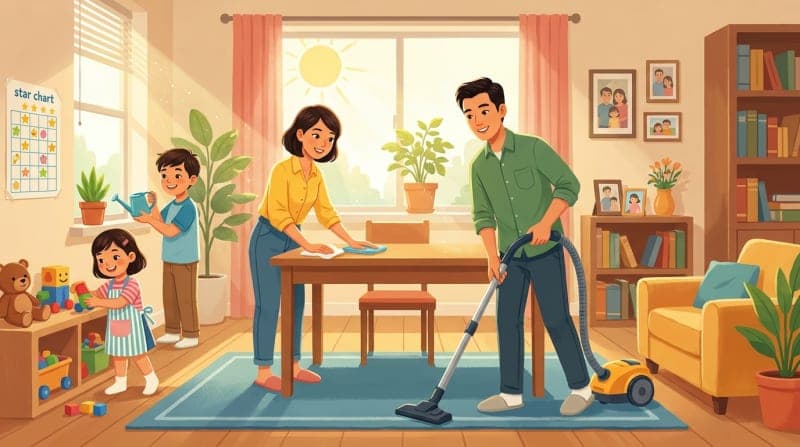
- Big Brother (10 years old): Wash dishes after dinner, fold blankets in the morning, take out the trash.
- Little Brother (6 years old): Put away toys neatly, arrange shoes, put dirty clothes in the hamper.
This division is clearly displayed on the phone/tablet screen. The two brothers no longer have an excuse to be jealous because everyone has their own "Mission," which is manageable and fair.
2. The Power of Stars ⭐
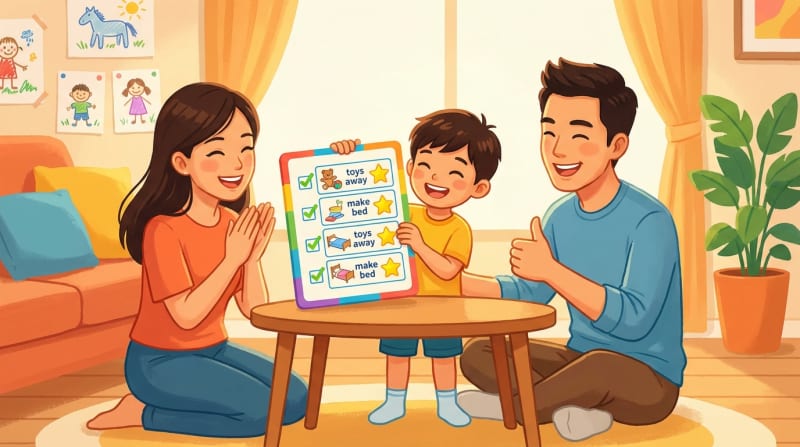
The key point creating the magical change lies in the reward mechanism. Children love games and the feeling of winning. Tasky Kid has turned boring housework into an exciting "role-playing game."
"Now, I don't need to be a 'nagging machine' anymore. The two of them grab my phone themselves to check what they need to do today to earn stars," Ms. Lan shared excitedly.
Every time they complete a task, the children receive a corresponding number of stars. The ting ting sound of points being added and the image of stars flying up the screen create immediate encouragement (dopamine) for the child, something that empty praise struggles to achieve.
From "Battlefield" to Self-Discipline and Love
After just 2 weeks of application, the change in Ms. Lan's family surprised everyone.
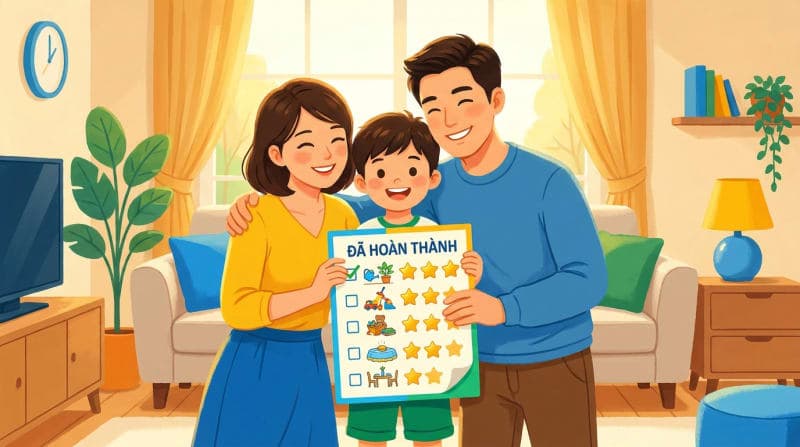
- Eliminating Rivalry: Everything is fair and transparent. Those who do more get more stars; those who are lazy get fewer. The two brothers went from "hating each other" to racing each other to see who could accumulate more stars.
- Forming Habits: Checking the app every day has become a new habit. The children voluntarily do their work without mom having to remind them a second time.
- Meaningful Rewards: Weekends are no longer about spankings or being grounded, but happy reward exchange sessions. "Whoever has enough stars gets to go to the bookstore or eat fried chicken," Ms. Lan recounted.
More importantly, Ms. Lan realized that this method not only keeps the house clean but also teaches her children lessons about finance and labor: To get what they like (going out, buying toys), they must work to accumulate (earn stars).
3 "Hard-Earned" Lessons for Parents Wanting Independent Kids
From Ms. Lan's story, parents can draw 3 golden rules for training children to do housework:
- Don't do it for them, guide them: Parents often make the mistake of doing things themselves to be fast because the child is slow or clumsy. Be patient, and use support tools so the child understands it is their responsibility.
- Fairness and Transparency: Children are very afraid of injustice. Use images, charts, or apps like Tasky Kid so every mission is clearly displayed.
- Reward Correctly: Don't reward with cash too early. Convert your child's effort into experiences (going out, watching movies) or items they desire. This helps children cherish the value of labor.
Conclusion
"If I had known, I would have used it sooner; it's relaxing for mom, trains the kids in self-discipline, and keeps the house peaceful," Ms. Lan's sharing is also the sentiment of many modern parents.
Teaching children to do housework is not just to share the burden with parents, but more importantly, to equip children with life skills, discipline, and gratitude. Don't let shouting damage family affection. Let technology become a powerful assistant, turning housework into a joy that connects family members.
Are you ready to "quit" the habit of scolding and help your children be happily self-disciplined like Ms. Lan's family?
👉 Download the app and experience it for free today: https://taskykid.com
🌟 Скачать Tasky Kid сейчас
Помогите ребенку выработать хорошие привычки с приложением для управления делами!
Скачать бесплатно