The Power of "Small Wins": Boosting Your Child's Confidence Every Day
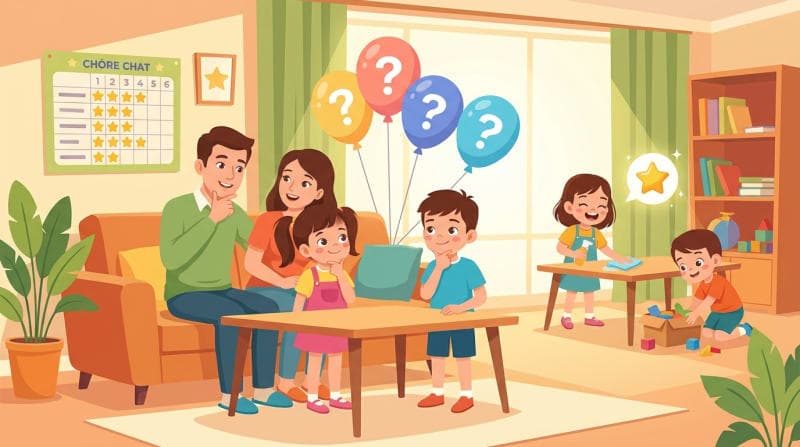
In the journey of raising children, have you ever wondered: Why do I praise my child so much, yet they still lack motivation or quickly forget those compliments? We often say "You're so smart," or "You did a great job," but it seems these words aren't weighty enough to create a lasting habit.
Let's take a look at ourselves. Have you noticed how incredibly satisfied we adults feel when crossing a line off a to-do list? In psychology, that feeling is called a "small win". When the brain registers a completed task, it releases Dopamine – the hormone of happiness and motivation.
And the good news is: Children are exactly the same! In fact, a child's need to "see" their results is often much stronger than that of adults. This article will help you understand the power of visualization and how to turn boring chores into a launchpad for your child's confidence.
Why is verbal praise not enough?
Praise is certainly an indispensable part of positive parenting. However, children – especially at the preschool and elementary age – possess very strong visual thinking.
1. Words are abstract, images are concrete
When you say, "You were very good for cleaning up your toys," those words are abstract and pass quickly. The child hears them, feels happy for a moment, but the memory of that praise fades. Children lack the abstract reasoning skills to link today's praise with the actions required tomorrow.
2. Children need evidence of their effort
Conversely, when a child cleans up their toys and sees a gold star ⭐ appear on a chart or phone screen, that is physical evidence. It sits there, shining, affirming: "This is my effort."
3. The feeling of "being recognized"
Seeing the number of stars increase day by day brings a clear sense of progress. It proves that their efforts aren't passing in silence or invisibility, but are being recognized and cherished.
The Psychological Power of "Small Wins"
Why is accumulating stars or checking off tasks so important? It’s because they create positive psychological momentum.
- Building confidence from the roots: Confidence doesn't come from empty flattery. Sustainable confidence comes from children realizing their own competence through completing tasks. Every time they finish a small task (brushing teeth, folding blankets, clearing bowls), they tell themselves: "I can do it!".
- Stimulating self-discipline: When the brain gets used to the joy of a "small win," the child tends to repeat the action to seek that sense of achievement again. This is the key to forming habits without parents needing to nag or scold.
- Turning pressure into a game: Chores like cleaning or studying often come with a heavy feeling. But when "visualized" into energy bars, badges, or star charts, they turn into an exciting game. Children no longer do it because they "have to," but because they want to "level up" or earn a reward.
How to help your child visualize their hard work (For busy parents)
You don't need to be a psychologist or an artist to apply this method. Here are simple ways to turn your home into an arena of small wins:
1. Create a physical reward chart
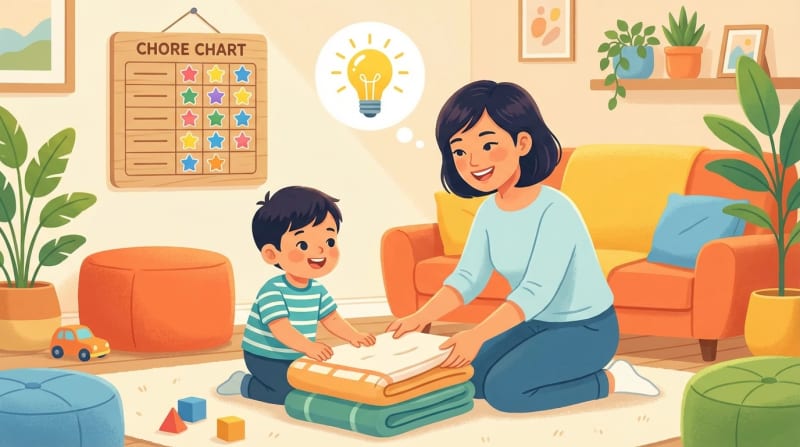
A whiteboard or magnetic board on the fridge is a great start. List 3-5 things to do in the day. Every time your child finishes one, let them stick a sticker or draw a star themselves. The act of "marking it off personally" is the most important ritual for the brain to register success.
2. Convert effort into rewards
Don't let the stars just be for decoration. Make a deal with your child: "If you get 20 stars this week, the whole family will go for ice cream/to the park". This teaches the lesson of labor and results – to get what they like, they need to accumulate hard work.
3. Use technology to support (Tasky Kid)
In the digital age, maintaining paper charts can sometimes be inconvenient (running out of stickers, forgetting to draw the board, torn paper...). This is where technology shines.
Tasky Kid is designed based on these very behavioral psychology principles. The app isn't just a to-do list; it's a system that "gamifies" life for children:
- Fun sound and visual effects: Every time your child taps the "Complete" button, victory sounds and flying stars create immediate excitement (instant gratification).
- Track achievement streaks: Children can look back at how many "green" days they had in the past week, creating motivation not to break their streak of diligence.
- Personalized goals: Parents can set age-appropriate tasks, from simple things like "Drink water" to complex ones like "Do math homework."
Conclusion
Don't let your child's efforts pass in silence. A compliment is good, but a visual recognition system is the key to building long-term confidence and self-discipline.
Help your child see their progress every day. Turn boring tasks into shining stars. When your child looks at that achievement board, they don't just see tasks done; they see a better version of themselves.
Are you ready to create those first "small wins" with your child?
👉 Start the journey of building good habits and try it for free at: https://taskykid.com
Let Tasky Kid be the companion that helps you record every moment of your child's growth!
🌟 Скачать Tasky Kid сейчас
Помогите ребенку выработать хорошие привычки с приложением для управления делами!
Скачать бесплатно