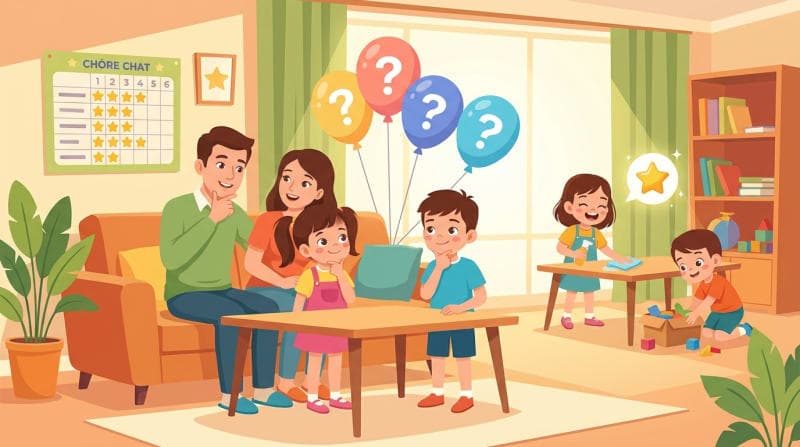
The "When - Then" Rule: The Secret to Self-Discipline for Kids and Peace of Mind for Parents
In the journey of raising children, do you ever feel like a broken "alarm clock," constantly having to repeat commands every single day?
"If you don't eat quickly, I'll let you starve!" "If you don't finish your homework, don't even dream of watching TV!" "If you don't pick up your toys, I'm throwing them all in the trash!"
Sentences starting with "If you don't... then..." are often our natural reflex when patience runs out. However, instead of cooperation, the result we usually get is crying, passive resistance, or a tense atmosphere in the family.
So, how can we get children to listen happily without using authority or intimidation? The answer lies in a simple yet powerful communication rule: The "When... Then..." Rule.
Why do "threats" often backfire?
Before diving into the solution, we need to understand why the old way doesn't work. When parents say: "If you don't do X, you will get punishment Y," the child's brain perceives this information as a threat.
According to behavioral psychology:
- Defense Mechanism: The child feels attacked and forced, leading to a desire to resist or just do the bare minimum to get it over with.
- Focus on the Negative: The child only pays attention to the punishment (being scolded, toys being thrown away) instead of understanding the value of what they need to do.
- Loss of Connection: Statements based on negative conditions reduce trust and affection between parents and children.
The Magic of the "WHEN... THEN..." Structure
The "When... Then..." rule (also known as Grandma's Rule) is a positive psychological technique that shifts the focus from "punishment" to "reward" and "opportunity."
The formula is very simple:
WHEN [Action the child needs to do] is finished, THEN [Privilege the child wants] will come.
Let's look at the difference through these examples:
-
❌ Instead of saying: "If you don't finish this bowl of rice, don't even think about ice cream!"
-
✅ Say this: "WHEN you finish this bowl of rice, THEN you can enjoy your ice cream dessert."
-
❌ Instead of saying: "If you haven't cleaned your room, you can't go play soccer."
-
✅ Say this: "WHEN your room is tidy, THEN you can grab your shoes and go play soccer with your friends."
-
❌ Instead of saying: "If you don't do your homework, I'm confiscating the iPad."
-
✅ Say this: "WHEN you complete your homework, THEN you will have 30 minutes to use the iPad."
3 Huge Benefits from a Small Change in Communication
By simply changing a few words, parents are completely shifting their child's mindset:
1. Shifting from "Forcing" to "Empowering"
With the "When... Then..." structure, parents are no longer authoritarian jailers. The decision is now in the child's hands. The child understands: "I want to go out (result), so I must clean the house (action)." The child feels in control of the situation rather than being bossed around.
2. Teaching Life's Inevitable Rules
Life operates on a principle: Work first, enjoy later. No one gets paid before they work. This rule helps children understand that responsibilities must be fulfilled before enjoying entertainment privileges. This is a valuable lesson in discipline and self-motivation.
3. Building a Positive Family Atmosphere
When threats are eliminated, the atmosphere in the house becomes much lighter. Parents maintain their calm, and children perform tasks with more enthusiasm because they are working towards a specific goal (reward) rather than running away from a punishment.
Secrets to Successfully Applying the "When... Then..." Rule
For this method to be truly effective, parents need to keep the following points in mind:
- Stay Calm: Speak in a gentle but firm tone. Do not shout.
- Ensure Consistency: If the child hasn't finished the "WHEN" part, absolutely do not give in and let them have the "THEN" part. If you break the rule, the child will continue to whine next time.
- Reasonable Rewards: The "THEN" part must be something the child actually wants and appropriate for the effort they put in.
Tasky Kid: Visualizing the "When... Then..." Rule
Understanding this psychology, Tasky Kid was designed as a powerful assistant to help parents apply the "When... Then..." rule in the most visual and vivid way on a digital platform.
On the Tasky Kid app, this rule is clearly demonstrated:
- WHEN: The child completes tasks (brushing teeth, studying, cleaning...) and clicks "Check" ✔️.
- THEN: The child immediately receives sparkling stars ⭐ or reward points.
These stars are not just virtual numbers. WHEN the child accumulates enough required stars, THEN they can use them to exchange for real-life gifts that parents have set up in the "Gift Shop" (like a trip to the park, a new toy, or 1 hour of watching movies).
Tasky Kid helps:
- Clarify Goals: The child clearly sees what they need to do to get what they want.
- Create Continuous Motivation: The feeling of accumulating stars every day stimulates the brain to produce Dopamine, making children more interested in doing chores.
- Reduce Load for Parents: Instead of having to remind "Do this," parents just need to say: "Check Tasky Kid to see how many stars you need to hunt for today!".
Conclusion
Changing communication habits isn't something that happens overnight, but the results it brings to your child's character development are priceless. Start practicing the "When... Then..." rule today to turn "bargaining" wars into happy cooperative agreements.
And don't forget, Tasky Kid is always ready to accompany parents to make the journey of training children's independence more interesting and easier than ever. Let your child voluntarily "hunt for stars" instead of waiting for parents to remind them!
👉 Download the app and experience it for free at: https://taskykid.com
🌟 Скачать Tasky Kid сейчас
Помогите ребенку выработать хорошие привычки с приложением для управления делами!
Скачать бесплатно