The "Small Steps" Strategy: The Secret to Teaching Independence Without Pressure
Hello, new week! Parents, take a deep breath and relax.
Does your family's Monday morning often start like a "battle"? Alarm bells ringing, urging cries of "eat faster or you'll be late," reminders like "did you pack your bag?"... We often start the new week with a long list of perfect expectations: wake up early, rapid-fire personal hygiene, get to school on time, and voluntarily sit at the desk in the evening.
However, reality sometimes throws a bucket of cold water on those expectations. The kids are sluggish, parents are stressed, and the family atmosphere becomes heavy before the sun is even high. It is perfectionism and the desire to change all bad habits instantly that causes the whole family to burn out.
Teaching life skills or self-discipline is not a sprint, but a "slow and steady" journey. This week, instead of trying to fix all your child's habits at once, Tasky Kid invites parents to try the "SMALL STEPS" strategy – a highly effective behavioral psychology method to train kids without the exhausting yelling.
Why do we often fail when trying to build routines?
Many parents share that they have tried everything, from gentle advice to strict discipline, but the child only behaves for a few days before "old habits die hard." The core reason often lies in setting too many goals at once.
Imagine if your boss asked you to change 10 work habits right on Monday morning, how would you feel? Overwhelmed and ready to give up. Children are the same. When a child's brain receives too many commands (wake up early, make the bed, brush teeth thoroughly, finish the meal, no TV...), they trigger a defense mechanism or ignore everything.
Moreover, constant nagging creates a dependency mindset: "Remembering is Mom and Dad's job; I only need to do it when I hear a really loud shout."
The "SMALL STEPS" Strategy: Less is More
The "Small Steps" strategy (inspired by the Japanese philosophy of Kaizen) focuses on breaking large goals down into actions so simple and easy to execute that children feel no hesitation or pressure when starting.
Instead of expecting your child to become perfect overnight, focus on progress bit by bit. Here is a 3-step roadmap for parents to apply this week:
1. Choose a "Keystone" – Only 1 to 2 Important Tasks
Don't be greedy. Observe which habit is causing the most trouble in your family?
- Is it forgetting books and supplies?
- Is it toys scattered everywhere after playing?
- Or simply brushing teeth before bed?
Choose only 1 or 2 most important tasks to train this week. When a child only has to focus on a specific task, the completion rate increases significantly. This initial success will create psychological momentum and confidence for the child to conquer other habits later.
2. "Hire" an Objective Reminder: Technology
One of the biggest mistakes parents make is turning themselves into a "human alarm clock" fueled by negative emotions. When you remind your child to shower the first time, you are gentle. But by the fifth time, you are snapping. Children are very sensitive; they will react to your attitude rather than focusing on the work to be done.
This is where Tasky Kid shines as an effective "digital butler":
- Objectivity: The app sends a notification when it's time. Phones/tablets don't scold, don't get angry; they simply notify. This eliminates the confrontation between parents and children.
- Clarity: Tasks are displayed with vivid images on Tasky Kid, helping children visualize easily (e.g., a picture of a toothbrush or a packed backpack).
Say to your child: "The phone just went 'ding-ding', let's see what Tasky Kid wants us to do!". At this point, parents shift roles from "commander" to "companion."
3. Celebrate Small Wins: The Power of Stars ⭐
Don't wait until your child gets a perfect score or finishes a huge job to praise them. The principle of habit building is immediate reward.
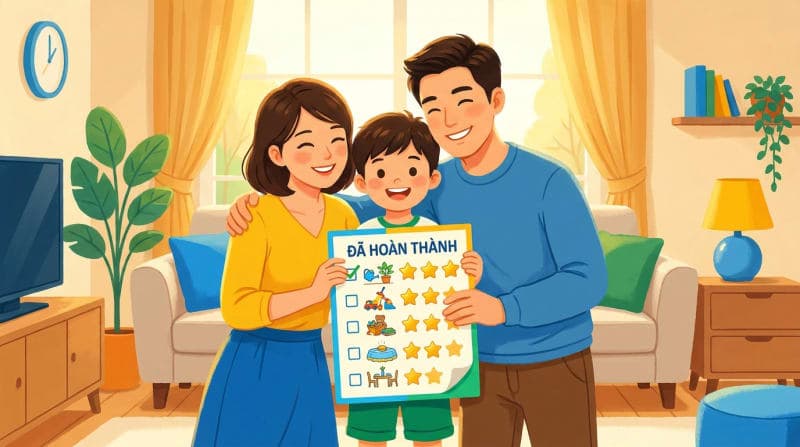
As soon as the child completes a small task (e.g., putting their pencil case in their bag), let them check the completion box on Tasky Kid and receive reward stars.
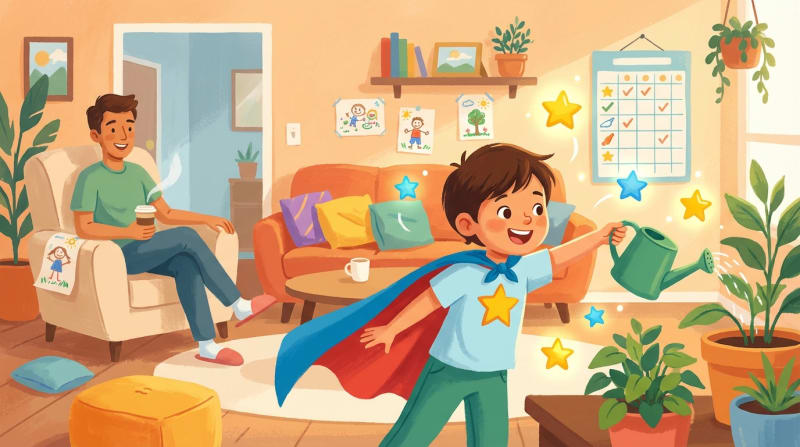
- Fun sounds and flying stars on the screen will stimulate the child's brain to release Dopamine – the hormone of happiness and excitement.
- Children will gradually understand the connection: Doing good work = Positive Emotions + Reward.
Parents, don't forget specific praise: "I saw you clean up your toys as soon as the bell rang, that makes me very happy!". A star today is the solid foundation for the responsibility of tomorrow.
Conclusion: Don't Stress, Enjoy the Journey
Raising smart and independent children is a long road, not an overnight success. There will be days when your child does very well, but there will also be days when they "forget" the habit. That is completely normal.
Don't be under too much pressure to turn your child into a genius or "the perfect child next door." As long as your child is a little better today than yesterday – putting on shoes a bit faster, clearing their bowl after eating – that is already a huge success for parents.
This new week, try letting go of some expectations, apply the "Small Steps" strategy, and let technology give you a hand.
Are parents ready to set small goals for an exciting new week?
👉 Download and try Tasky Kid for free right here: https://taskykid.com
Let Tasky Kid help parents turn managing their child's tasks into a joy rather than a burden!
🌟 Baixe o Tasky Kid Agora
Ajude seu filho a construir bons hábitos com um aplicativo de gerenciamento de tarefas!
Baixar Grátis