The "Secret" to Getting Your Child to Proactively Do Chores in Just 2 Weeks
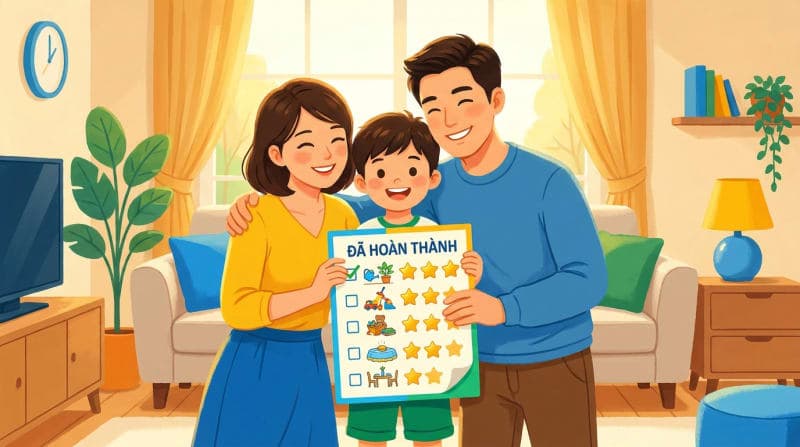
"Mom, I have enough stars to trade for the Lego set!"
That joyful exclamation made Ms. Thanh Tam (Hanoi) both surprised and overwhelmed with happiness. Just two weeks ago, the evening scenario in her family was the complete opposite: a mother screaming, a child crying or muttering in annoyance. But now, her 8-year-old son, Bin, has changed to an unbelievable extent.
So, what created this miracle? There is no magic involved, just a small shift in educational method that any parent can apply. Let's explore Ms. Tam's story and the fascinating secret to teaching children independence below.
When Mom becomes a "broken record"
If you are a parent, you have surely experienced this feeling: Coming home tired from work, seeing the house in a mess, while your child is glued to the TV or phone. And then the familiar refrain begins:
- "Bin, clean up your toys right now!"
- "Have you taken a shower yet? It's already 7 PM!"
- "Why are these clothes thrown all over the place?"
Ms. Tam confided: "Before, I felt exactly like a broken record. I kept saying the same sentence over and over, but it never entered my son's ears. He would just grunt to get by, his hand still clicking the TV remote. Talking too much made me irritable, and hearing too much made him desensitized. It was exhausting for me, and the family atmosphere was always as tense as a violin string."
In fact, psychologists point out that repetitive reminding (nagging) is often counterproductive. It causes children to develop a dependency mentality (knowing mom will remind them again or just do it herself to be quick) and creates a mechanism of "selective hearing."
The turning point from a "Secret Agreement"
Realizing the old way wasn't working, Ms. Tam decided to change tactics. Instead of playing the role of the "nagging monster," she switched to the role of a "companion" and applied positive discipline through the Tasky Kid app.
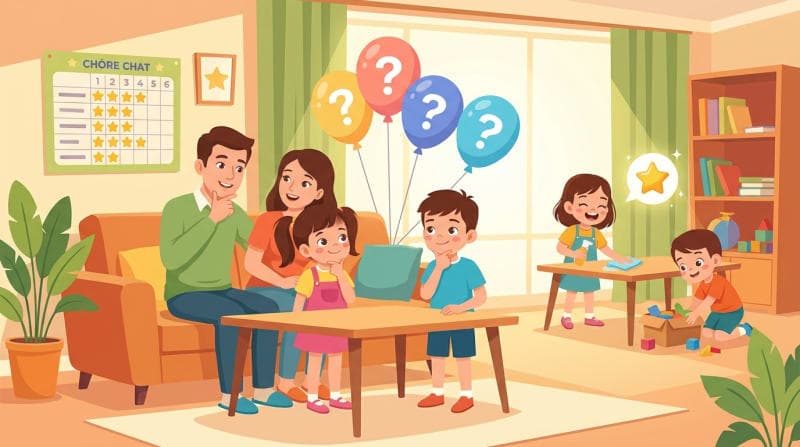
She sat down with Bin and established a "secret agreement":
- Goal: A spaceship Lego set that Bin had been dreaming of for a long time.
- Method: Bin needed to accumulate 500 stars ⭐ on the Tasky Kid app.
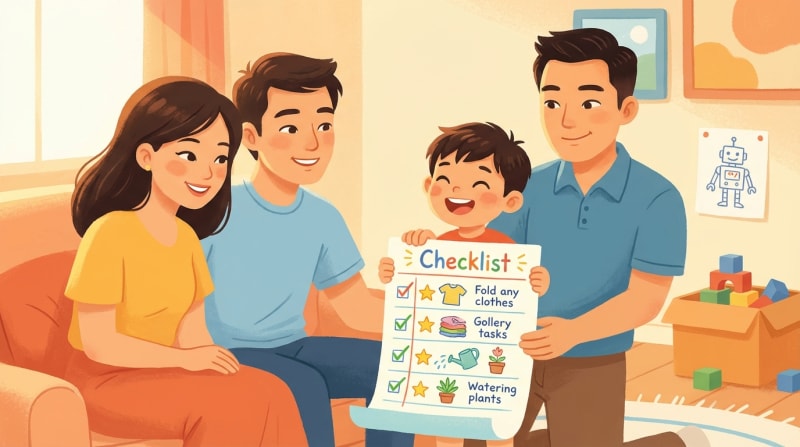
- Exchange: Each completed chore corresponds to a certain number of stars (e.g., tidying the desk = 5 stars, folding clothes = 10 stars, watering plants = 5 stars).
This change hit the right psychological notes: Loving play more than work and Loving recognition.
Why is the "Stars for Gifts" method effective?
Bin's story is not a coincidence. Applying technology and gamification mechanisms to parenting brings huge psychological benefits:
1. Turning responsibility into a game
With Tasky Kid, a dry list of chores turns into "quests" to be conquered. Children are naturally competitive and love the feeling of achieving goals. When they see their star count increase every day, their brains release Dopamine – the happiness hormone, making them excited to do even more.
2. Teaching patience and delayed gratification
To get the Lego set, Bin couldn't demand his mother buy it immediately. The boy had to work and accumulate every single small star over 2 weeks. This is a fundamental lesson on the value of labor: To get what you like, you must put in worthy effort.
3. Giving autonomy to the child
Ms. Tam shared: "The effect was unimaginable! Now when I come home from work, I don't need to remind him. Bin opens the app on the tablet himself to see the list of things to do. He has the right to choose which task to do first and which later. Once done, he checks it off immediately to wait for my star approval."
When children are given control (autonomy), they take more responsibility for their actions compared to being ordered around.
Secrets for parents to apply successfully like Ms. Tam
To achieve results like Bin, downloading the Tasky Kid app is the first step, but how parents accompany their children is the key. Here are 3 tips from education experts:
Set appropriate rewards
Don't just offer expensive material rewards. Diversify the rewards in the Tasky Kid Gift Store:
- Small rewards: 30 minutes of TV, an ice cream, staying up 15 minutes late on the weekend.
- Big rewards: Toys, a trip to the park, a movie theater outing. Let your child propose the rewards; they will be doubly motivated.
Be consistent and fair
When your child finishes a task, parents need to check and "approve stars" immediately to encourage them. Conversely, if the child doesn't do it, absolutely do not give "free" stars out of pity. Parental consistency will help the child understand the rules of the game and respect discipline.
Acknowledge effort, not just results
Sometimes the clothes aren't folded perfectly straight, or watering the plants wets the floor a bit. Don't be too quick to criticize! Praise them for voluntarily doing the work, then gently guide them to do better next time.
Tasky Kid – A bridge of love in the family
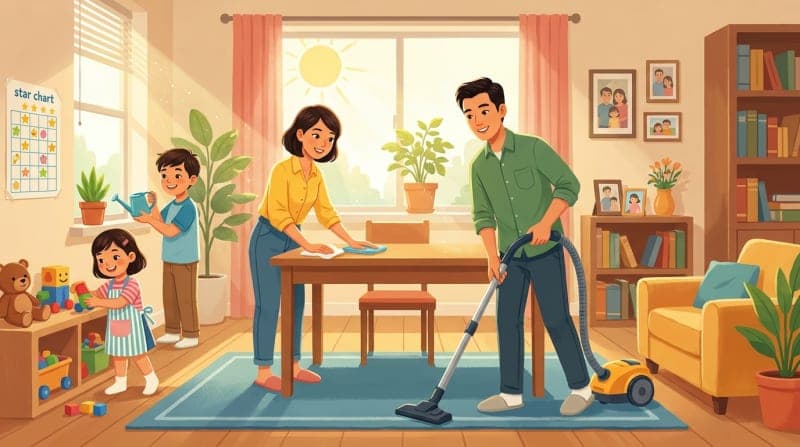
Not only does it help keep the house tidy, but Tasky Kid is also a bridge for children to understand the value of labor and the joy of receiving worthy rewards. Most importantly, the app frees parents from the pressure of scolding, returning peaceful and happy evenings to the family.
The image of Bin voluntarily tidying his desk and excitedly showing off his accumulated stars to his mom is the clearest proof that: Teaching children doesn't need rods, just the right method.
Do you want your child to be as self-disciplined and enthusiastic as Bin? Don't let evenings pass by in tired shouting. Start your journey of change today!
👉 Download the app and experience it for free now: https://taskykid.com
Tasky Kid - An app for task management and good habit formation for children, trusted by thousands of Vietnamese parents.
🌟 Baixe o Tasky Kid Agora
Ajude seu filho a construir bons hábitos com um aplicativo de gerenciamento de tarefas!
Baixar Grátis