The Dopamine Secret: Raising Self-Disciplined Kids Without the Rod
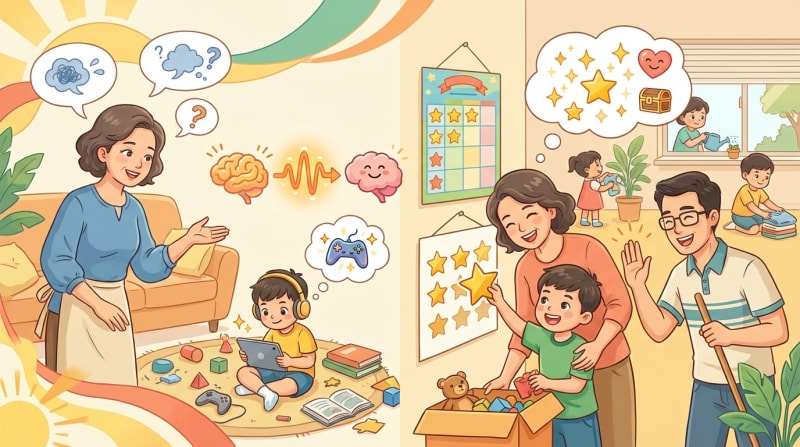
Have you ever found yourself in this "laugh or cry" situation: You remind your child to clean their room for the tenth time, your volume rising from gentle to "raging lion," yet the response is still indifference or a grumpy attitude? However, just minutes later, when picking up the iPad to play a game, your child is hyper-focused, eyes shining, enthusiastically overcoming difficult levels without anyone forcing them.
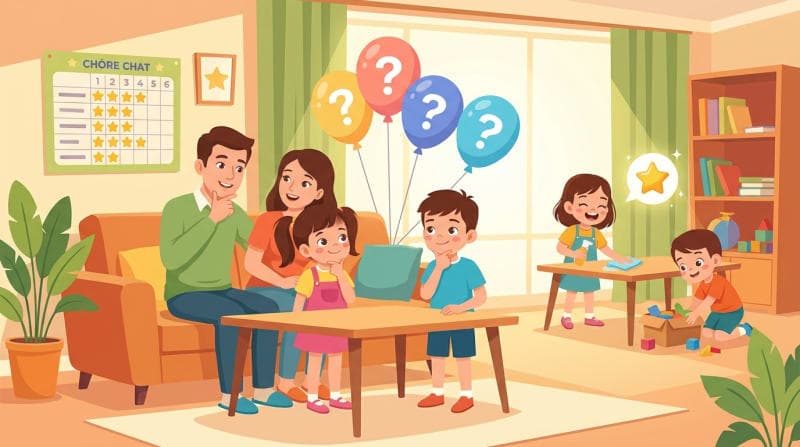
Why is there such an ironic paradox? Is your child "naughty," lazy, or deliberately defiant?
The answer actually doesn't lie in the child's personality, but in the biological mechanism of the brain. More specifically, it is the influence of Dopamine - a type of "happiness hormone." Understanding this secret puts the golden key in parents' hands to get children to do chores voluntarily without wasting a single tear or shout.
What is Dopamine and how does it control a child's behavior?
Dopamine is a neurotransmitter released by the brain when we achieve an accomplishment, receive a reward, or experience satisfaction. It acts as a natural "stimulant," creating feelings of excitement and pleasure.
More importantly, Dopamine creates a powerful feedback loop:
- Action
- Reward -> Brain releases Dopamine
- Pleasure
- Desire to repeat the action (Motivation)
Children's brains, which are in a stage of rapid development, are extremely sensitive to this mechanism. Children always crave recognition and seek joy. This is why online games are so attractive: Game developers are masters at "hacking" Dopamine. Every time a child defeats a monster or passes a level, they receive gold, hear a cheerful "ting ting" sound, and see the praise "Excellent!" The reward comes immediately, and Dopamine explodes.
Why does Mom's "nagging" fail?
Contrary to games, household chores like washing dishes, sweeping, or folding clothes are often:
- Boring: No vivid colors or sounds.
- Delayed or non-existent rewards: When the child finishes the work, they sometimes only receive silence (because parents think it's expected behavior) or, worse, criticism like "why isn't this swept clean yet."
- Associated with negative emotions: When parents remind them by shouting, the child's brain releases Cortisol (stress hormone).
When Cortisol appears, the brain switches to "fight or flight" mode. The child will generate a defensive, avoidant, or defiant reaction. At this point, all parental lectures become meaningless because the brain's information "reception gate" has closed.
Turning Chores into a "Star Hunting Game": Applying Dopamine to Parenting
To help children find joy in responsibility, parents need to change tactics: Switch from "forcing through fear" to "leading with joy." Here is how you can apply this today:
1. Break down tasks (Micro-tasks)
Don't say, "Clean the house." That is too large and vague a task, making the child feel discouraged. Break it down into tasks like in a game:
- Mission 1: Arrange books neatly on the shelf.
- Mission 2: Put dirty clothes in the basket.
- Mission 3: Wipe the study desk.
Every time a small task is completed, the child feels like they have just "passed a level," stimulating a sense of achievement.
2. Instant Gratification Mechanism
This is the core factor. As soon as the child completes a task, provide a "reward" immediately. It doesn't have to be an expensive material item. It could be:
- A specific compliment: "Wow, you stacked the books as neatly as a library!"
- An energetic high-five.
- A star or accumulated points.
This immediate recognition is when Dopamine is released, planting the thought in the child's subconscious: "Doing this is fun, I want to do it again to get praised/get stars."
3. Visualize progress
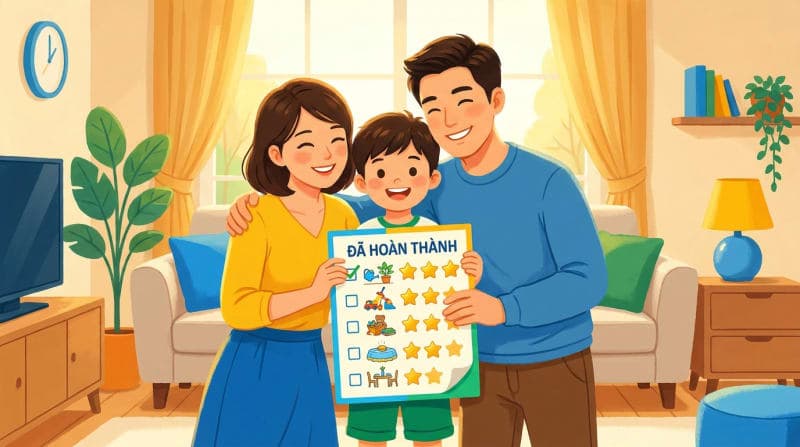
Children think in images. Show them that their efforts are accumulating. An achievement tracking chart on the fridge or an app that records scores will be more effective than a thousand empty words. When they see the number of stars increase every day, they will have the motivation to continue "grinding" to reach a bigger goal (exchanging for a gift).
Tasky Kid - The powerful assistant helping parents "Gamify" chores
Understanding behavioral psychology and the power of Dopamine, Tasky Kid was created to help parents digitize this educational process in the easiest and most exciting way.
Instead of tiring arguments, Tasky Kid turns dry tasks into a fascinating "star hunting" journey:
- Vivid task system: Parents can easily set up tasks (studying, brushing teeth, cleaning up toys...) with cute illustrations.
- Instant recognition: As soon as the child finishes, they personally press "Complete" and receive reward stars immediately. Fun sounds and effects in the app will activate Dopamine, bringing a feeling of victory just like playing a game.
- Attractive reward exchange: Accumulated stars are used to exchange for real gifts the child likes (a movie trip, a new toy, or an extra 30 minutes of TV). This teaches the lesson of labor and enjoyment: To get what they like, they need to put in the effort.
With Tasky Kid, children work not because they are afraid of being scolded, but because of the joy and pride of seeing themselves grow and become more capable every day.
Conclusion
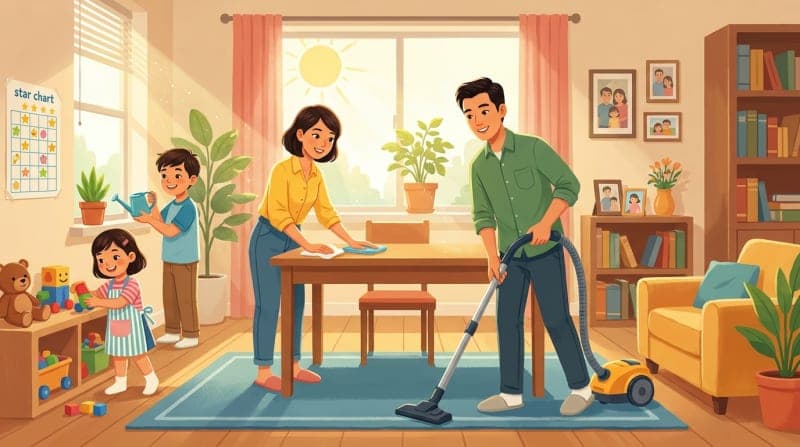
Raising children is a long journey requiring patience and understanding. Instead of letting the house become a "battlefield" of shouting, turn it into a "playground" where children can practice skills and enjoy the joy of growing up.
By cleverly applying the Dopamine mechanism and support from technology, parents can completely build habits of self-discipline and positive discipline in their children while maintaining a happy, harmonious family atmosphere.
Start the "star hunting" journey with your child today!
👉 Download the Tasky Kid app and set up a reward system for your child at: https://taskykid.com
🌟 Baixe o Tasky Kid Agora
Ajude seu filho a construir bons hábitos com um aplicativo de gerenciamento de tarefas!
Baixar Grátis