The Ultimate Trick to Get Kids to Do Chores Voluntarily Without Nagging | Tasky Kid
❓ Q&AThursday, December 25, 2025|741 Ansichten
The Ultimate Trick to Get Kids to Do Chores Voluntarily Without Nagging
You arrive home from work, exhausted, staring at a pile of scattered toys or unwashed dishes, while your child is glued to the TV screen. You offer a gentle reminder, then raise your voice, but the only response you get are excuses so familiar you’ve memorized them by heart.
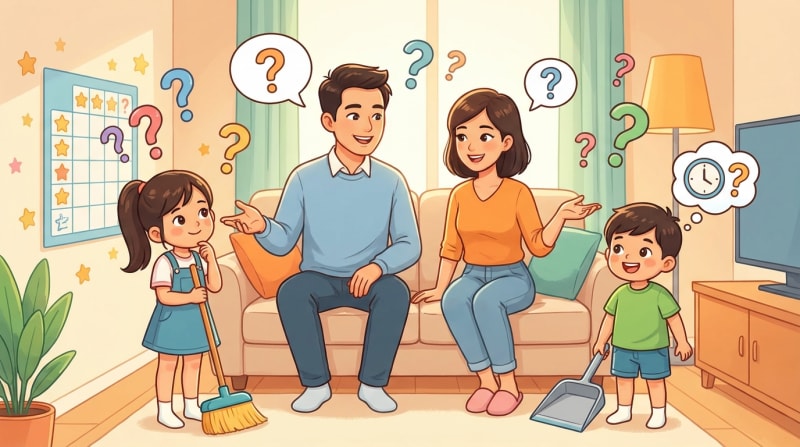
If this scenario sounds familiar, you are not alone. The "battle" to get children to do housework is a common headache for millions of modern parents. But before we try to solve it, let's try to "diagnose" the classic reasons children use to shirk work. Is there a different psychology hiding behind that apparent laziness?
1. Decoding the 4 Classic "Magic Spells" Kids Use to Avoid Work
In a fun survey recently conducted within our parenting community, we identified the 4 most common reaction groups when children are assigned chores. Let's see which group your child belongs to:
A. The Procrastination Tactic: "I'll do it in a little bit!"
This is the most common phrase. The child doesn't refuse outright (for fear of being scolded) but uses a stalling tactic. The problem is that the child's "little bit" could be 3 hours later, or even... the next day.
Psychology: The child hopes parents will forget, or that parents will get so impatient they’ll just do it themselves to get it over with.
B. The Comparison Game: "Why is it always me?"
This phrase often appears in families with multiple siblings. The child feels treated unfairly or is simply looking for an excuse to push the responsibility onto someone else.
Psychology: A sense of unfairness or a desire to seek attention to escape the current task.
C. Sudden Onset Laziness: "I'm tired/my hand hurts/I'm so sleepy..."
They might be playing games energetically, but the moment you mention sweeping the floor, they suddenly have a "stomach ache." This is a natural defense mechanism when a child's brain faces something they aren't interested in.
#TaskyKid#NuoiConThongMinh#ViecNha#ParentingHumor
🌟 Tasky Kid jetzt holen
Helfen Sie Ihrem Kind, mit einer Aufgabenmanagement-App gute Gewohnheiten zu entwickeln!
Psychology: Using health excuses to appeal to their parents' sympathy.
D. The Invincible Shield: "But I'm busy studying!"
This is the reason that leaves many parents "speechless." In many families, education is always the top priority. Children are very smart to realize that as soon as they pull out their books, all requests to do chores are nullified.
Psychology: Using parents' priorities as a shield for their own laziness.
2. Why yelling and constant reminders don't work?
Many parents choose to nag repeatedly or use threats of punishment. However, child psychology experts point out that:
Immunity to Rules: When you remind them 10 times but only punish them once, children learn to "ignore" the first 9 times.
Creating Resistance: Chores turn into punishment, a burden rather than a responsibility shared with the family. Children will do them with a resentful, coping attitude.
Disconnection: The family atmosphere becomes tense, and meals are ruined by shouting matches.
So what is the solution? Instead of using the "stick," use a "carrot," but at a higher level: Gamification.
3. Turning Chores into Fun: The "Earn Coins for Gifts" Method
Children love video games because their mechanism is very clear: Mission -> Challenge -> Instant Reward. Why don't we apply this exact mechanism to parenting?
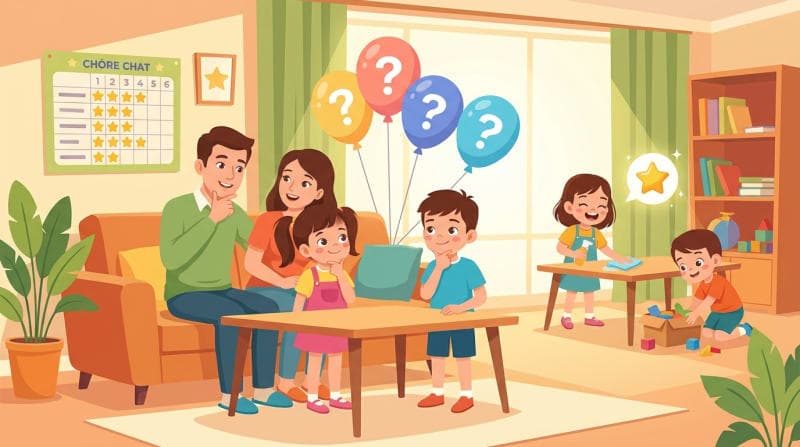
When washing dishes, cleaning the room, or folding clothes is no longer "hard labor" but an opportunity to accumulate points (or stars ⭐) to exchange for a favorite gift, the child's motivation changes completely.
Step 1: Set up a clear "Price List" for tasks
Sit down with your child and agree on the terms. For example:
Washing dishes: 5 stars ⭐
Making the bed: 3 stars ⭐
Taking out the trash: 2 stars ⭐
Step 2: Determine attractive rewards
What are these stars used for? This is where the child gets to choose (within limits):
50 stars: 1 extra hour of TV on the weekend.
100 stars: A new comic book.
200 stars: A trip to the movie theater.
Step 3: Empower them to take initiative
Instead of you having to say, "Go wash the dishes," the child will calculate: "Today I need 5 more stars to get that gift, I have to go wash the dishes right now." Self-discipline arises from the desire to achieve a goal, not from the fear of being scolded.
4. Tasky Kid - The Powerful Assistant for Stress-Free Parenting
The theory is sound, but drawing charts on paper, pasting stickers, or manually tracking stars often causes busy parents to give up after a few weeks. That is why Tasky Kid was born.
Tasky Kid is a task management and reward app for children, helping to digitize the entire process above:
Vivid Interface: Designed like a game, making children excited every time they open the app.
Automated Reminders: Parents no longer need to play the role of a "nagging machine." The app gently notifies the child when it's time for a mission.
Transparent Point System: Children see their progress every day. Watching the star count increase creates dopamine (the happiness hormone) similar to playing games.
Easy Redemption: The reward list is pre-set; children can tap to redeem when they have enough points, teaching them lessons about finance and patience.
"Double" benefits when using Tasky Kid:
Independent Kids: Forms habits of doing housework, managing time, and taking responsibility.
Relaxed Moms: No more screaming every evening; the family is peaceful, and Mom has more time to take care of herself.
Conclusion
Don't let your child's "magic spells" for avoiding work stress you out every day. Remember, the ultimate goal is not just a clean house, but teaching children life skills and a sense of responsibility.
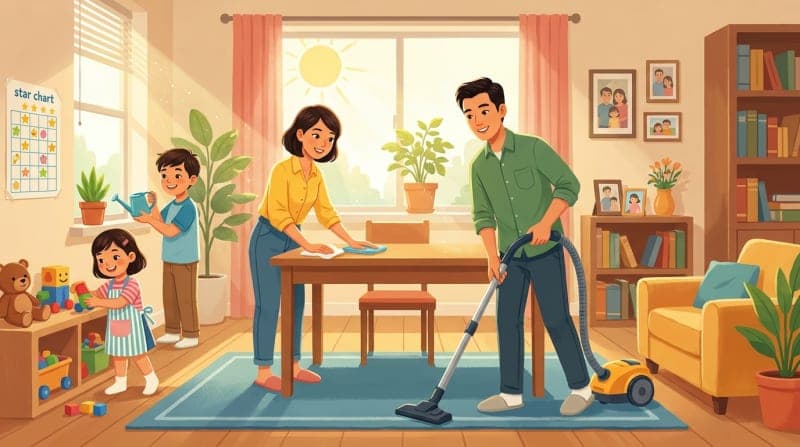
Change your approach today. Turn excuses into excitement, and turn housework into a fun game where the whole family wins.
👉 Are you ready to "revolutionize" housework? Download Tasky Kid and try it for free at:https://taskykid.com