The Secret to Getting Kids to Do Chores Voluntarily Without the Nagging | Tasky Kid
📖 StoryTuesday, January 06, 2026|738 просмотров
The Secret to Getting Kids to Do Chores Voluntarily Without the Nagging
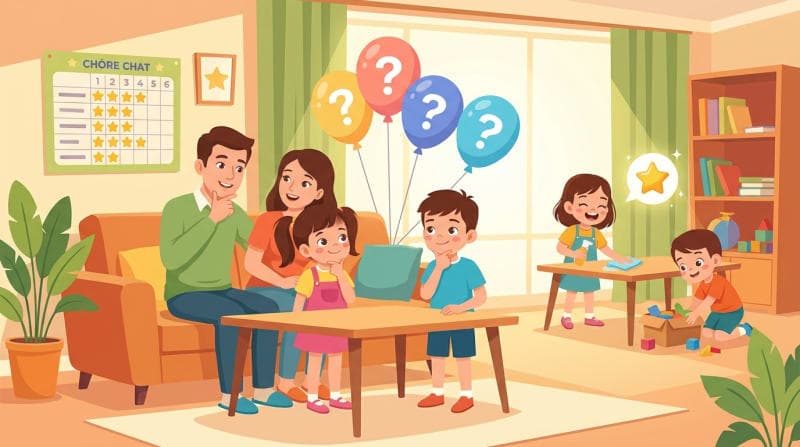
Have you ever found yourself in this situation? One fine evening, after watching a few inspirational videos on social media, you get fired up with determination to get your child into a routine. You painstakingly draw up a chore assignment chart, buy all sorts of red and blue stickers, and solemnly paste it onto the refrigerator door. The first week, everything is like a dream. The child is excited, and mom is happy.
But then... come the second and third weeks.
Some days you come home late from work, exhausted, and forget to check. Other days, your child finishes their chores, but you’ve run out of stickers and haven't had time to run to the bookstore. The paper on the fridge starts to curl at the edges and gets torn from water splashes or humidity. Gradually, your child sees that mom is "slacking off," their initial excitement fades, and everything goes "back to square one." The scenes of shouting and reminding your child to shower or put away toys resume every single day.
This is exactly the story of Ms. Thanh Mai (Hanoi) and little Bin – a story all too familiar to millions of mothers. But the wonderful thing is that Ms. Mai found an "escape route" to turn a playful boy into a responsible little manager. Where does the secret lie?
Why do "Traditional Reward Charts" easily fail?
Before looking for a solution, we need to understand the cause. According to educational psychology experts, children live in current emotions and need immediate feedback.
While the traditional paper chart and sticker method is good in theory, it faces many barriers in the reality of a busy life:
Inconsistency: Moms belonging to "Team Mom Brain" often forget to award points, making children feel their efforts aren't recognized in a timely manner.
Physical Inconvenience: Torn paper, running out of pens, or running out of stickers disrupts the process.
Lack of Long-term Appeal: Cute stickers only attract children for a short time. Once the novelty wears off, children need a clearer motivation.
#TaskyKid#DayConTuLap#MeThongThai#UngDungGiaoDuc
🌟 Скачать Tasky Kid сейчас
Помогите ребенку выработать хорошие привычки с приложением для управления делами!
Ms. Thanh Mai shares: "Bin saw that I was 'slacking,' so he got discouraged too. I realized the fault wasn't entirely his, but because the tool I was using wasn't convenient enough to maintain the habit for both mother and son."
Technology 4.0: A Powerful Assistant for Modern Parents
Change the tool, change the result. When Ms. Mai switched from a paper chart to the Tasky Kid app, all physical barriers seemed to be removed.
1. Convenience "Anytime, Anywhere"
The phone is an inseparable object for most parents today. Instead of running to the fridge to mark a check, now, as soon as Bin folds a blanket or tidies up his basket of toys, Ms. Mai just needs one light touch on the screen.
"Honestly, I'm quite forgetful. But my phone is always in my hand. Now, whenever Bin finishes a task, I tap to award a star ⭐ right on the app. It's quick, simple, and transparent," Ms. Mai recounts excitedly.
2. Transparency and Fairness
Children are very sensitive to fairness. On the app, stars are accumulated automatically, and work history is clearly saved. The child can open the app on mom's phone (or their own tablet) to see their achievements grow every day. The feeling of seeing their "assets" (number of stars) increase creates a type of dopamine (happiness hormone) that helps the child want to repeat that good action.
Bin's Story: From Passive to Proactively "Applying for Jobs"
The most surprising thing didn't stop at Bin agreeing to do housework, but how his mindset changed.
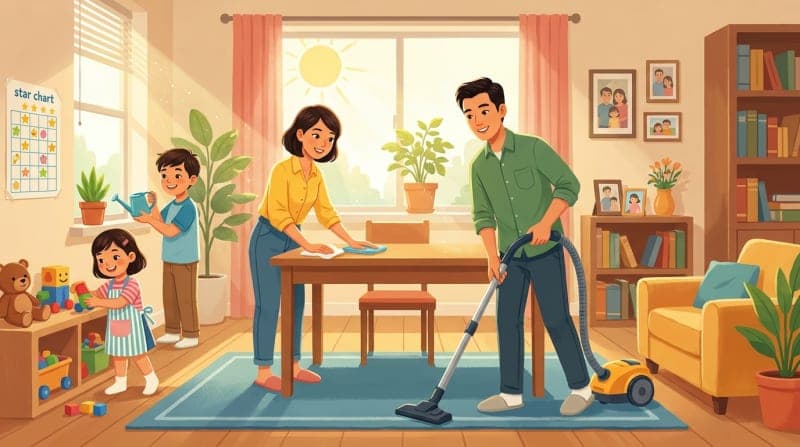
Yesterday, Bin surprised the whole family when he picked up a calculator, did some math, and then boldly announced: "Mom, I'm only 5 stars short of redeeming a movie ticket. Can you let me clean the glass door for extra stars?"
Do you see the difference?
Before: Mom had to remind, urge, or even order him to do it.
Now: The child self-calculates goals and proactively asks for work to achieve those goals.
This is a lesson in Financial Mindset and Goal Management that Tasky Kid cleverly integrates. The child understands that: To get the reward (movie ticket), I need to work (clean the glass door). This lesson is more valuable than any dry lecture.
3 "Golden" Tips to Use the App Effectively for Your Child
Based on the experience of Ms. Thanh Mai and thousands of parents using Tasky Kid, here are 3 tips for you to apply successfully:
Don't be "greedy" with tasks: When starting, only assign 2-3 small tasks per day (like brushing teeth, putting away toys, folding blankets). When the child gets used to it and is excited about collecting stars, gradually add more difficult tasks.
Agree on attractive rewards: Sit down with your child and ask: "What do you want to exchange these stars for?". It could be a movie trip, a Lego set, or simply 30 minutes of extra TV time on the weekend. When the reward comes from the child's desire, motivation doubles.
Award stars immediately: Don't wait until the weekend to tally up. Award stars as soon as the child finishes the task. Instant Gratification is the key to building habits in a child's brain.
Conclusion
Parenting in the 4.0 era doesn't mean leaving everything to machines, but knowing how to use smart tools to reduce pressure on parents and increase excitement for children.
The story of Ms. Thanh Mai and Bin is the clearest proof: Sometimes, a major change in a child's character starts with a small change in the mother's method. Don't let torn pieces of paper be a barrier to your child's independence.
Do you want your child to be self-disciplined, know how to manage goals, and be excited about housework like Bin?