Sức Mạnh Của "Chiến Thắng Nhỏ": Giúp Con Tự Tin Hơn Mỗi Ngày
Trong hành trình nuôi dạy con cái, có bao giờ ba mẹ tự hỏi: Tại sao mình khen con rất nhiều, nhưng trẻ vẫn thiếu động lực hoặc nhanh chóng quên mất lời khen đó? Chúng ta thường nói "Con giỏi lắm", "Con làm tốt lắm", nhưng dường như những từ ngữ ấy chưa đủ sức nặng để tạo nên một thói quen bền vững.
Hãy thử nhìn lại chính mình. Ba mẹ có để ý rằng, người lớn chúng ta thường cảm thấy vô cùng thỏa mãn khi gạch bỏ được một dòng trong danh sách to-do list không? Cảm giác đó, trong tâm lý học, được gọi là "chiến thắng nhỏ" (small wins). Khi bộ não ghi nhận một nhiệm vụ đã hoàn thành, nó tiết ra Dopamine – hormone của sự hạnh phúc và động lực.
Và tin vui là: Trẻ con cũng y hệt như vậy! Thậm chí, nhu cầu "nhìn thấy" thành quả của trẻ còn mạnh mẽ hơn người lớn rất nhiều. Bài viết này sẽ giúp ba mẹ hiểu sâu hơn về sức mạnh của trực quan hóa và cách biến những việc vặt nhàm chán thành bệ phóng cho sự tự tin của con.
Tại sao lời khen bằng lời nói là chưa đủ?
Lời khen ngợi chắc chắn là một phần không thể thiếu trong việc giáo dục tích cực. Tuy nhiên, trẻ em – đặc biệt là ở độ tuổi tiểu học và mầm non – có tư duy trực quan (visual thinking) rất mạnh.
1. Lời nói là trừu tượng, hình ảnh là cụ thể
Khi ba mẹ nói "Con ngoan lắm vì đã dọn đồ chơi", lời nói đó mang tính trừu tượng và trôi qua rất nhanh. Trẻ nghe thấy, vui vẻ trong chốc lát, nhưng sau đó ký ức về lời khen sẽ phai nhạt dần. Trẻ chưa đủ khả năng tư duy trừu tượng để xâu chuỗi lời khen hôm nay với hành động cần làm vào ngày mai.
2. Trẻ cần bằng chứng cho sự nỗ lực
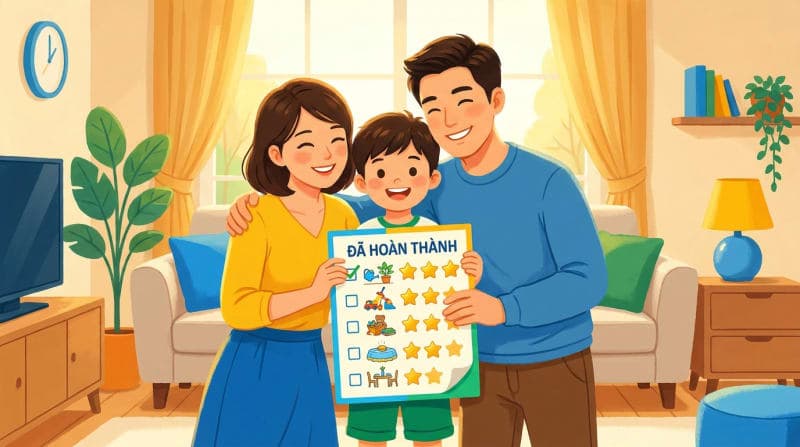
Ngược lại, khi con tự tay dọn xong đồ chơi và nhìn thấy một ngôi sao vàng ⭐ xuất hiện trên bảng thành tích hoặc màn hình điện thoại, đó là một bằng chứng vật lý. Nó nằm đó, tỏa sáng và khẳng định: "Đây là công sức của mình".
3. Cảm giác "được ghi nhận"
Việc nhìn thấy số lượng ngôi sao tăng lên từng ngày mang lại cảm giác tiến bộ rõ rệt. Nó chứng minh rằng những nỗ lực của con không trôi qua trong im lặng hay vô hình, mà được ghi nhận một cách trân trọng.
🌟 Tải ngay Tasky Kid
Giúp con xây dựng thói quen tốt với ứng dụng quản lý công việc cho trẻ em!
Tải ứng dụng miễn phí