Kids Voluntarily Doing Chores: The Golden Secret for Busy Moms
Every evening, when the clock strikes 9, what is the atmosphere in your family usually like? Is it a time for relaxing moments and reading with your child, or is it a "battlefield" filled with shouting, rushing, and whining?
If you see your own reflection in the story below, then this article is exactly for you.
The 9 PM "Loudspeaker" Nightmare
"Why is the house so quiet tonight? Is our son asleep already?"
That was the question my husband asked last night when he came home late, his face full of surprise mixed with a bit of suspicion. It’s understandable, because normally at this hour, I would still be playing the role of a "loudspeaker" operating at full capacity:
- "Bin, go brush your teeth for Mom right now!"
- "Have you packed your bag for tomorrow yet?"
- "Why are toys thrown all over the house like that? Clean them up immediately!"
The result of those evenings was usually a familiar script: Mom is exhausted, hoarse, and frowning; the child is pouting and working with resistance; and the family atmosphere is always tense right before bedtime.
I used to ask myself: Why do I always have to play the "bad guy," acting like a human reminder machine every single day? Is there a way for my child to be self-disciplined without the need for rods or shouting?
Why does constant reminding backfire?
Child psychology experts point out that when parents remind their children too much, it inadvertently creates a psychology of dependency. Children will default to thinking: "Remembering is Mom's job. I'll just keep playing; I'll do it when she screams."
Furthermore, dry commands often make children feel imposed upon, causing them to lose interest and internal motivation. Children do chores not out of responsibility, but out of fear of being scolded. This goes completely against the philosophy of early education and fostering independence that we aim for.
The "Magical" Change thanks to Gamification
Last week, in a moment of desperation looking for a solution, I found the "love of my life": The Tasky Kid app.
Instead of shouting, I decided to change tactics 180 degrees. I applied the Gamification method – turning boring household chores into exciting "missions" in a game where Bin is the main character.
1. Empowering the child
Bin had his own account created on a tablet with a colorful interface. Coming home from school, instead of gluing his eyes to YouTube, the first thing he did was voluntarily open Tasky Kid to see what missions "Commander Mom" had assigned for the day. The feeling of owning his task list made him feel much more "grown-up."
2. The magic of the stars ⭐
What makes Bin obsessed with this app isn't the to-do list, but the clear reward system through stars. I set up a specific reward point system:
- Organizing the desk neatly: +2 stars.
- Folding clothes after drying: +3 stars.
- Watering plants for Mom: +1 star.
- Brushing teeth on time without reminders: +1 star.
Bin's goal is to accumulate enough 50 stars to exchange for a ticket to the water park this weekend – something he has wished for for a long time.
Results beyond expectations
Last night was the clearest proof of this method's success.
When checking the app, Bin saw he was exactly 2 stars short of his goal to redeem this week's gift. Do you know what he did? Bin automatically ran to the door, arranged all the family's shoes neatly on the rack, then ran in to show off to Mom to get his supplementary mission "approved."
Everything happened voluntarily and happily, without a single shout, without a single reminder.
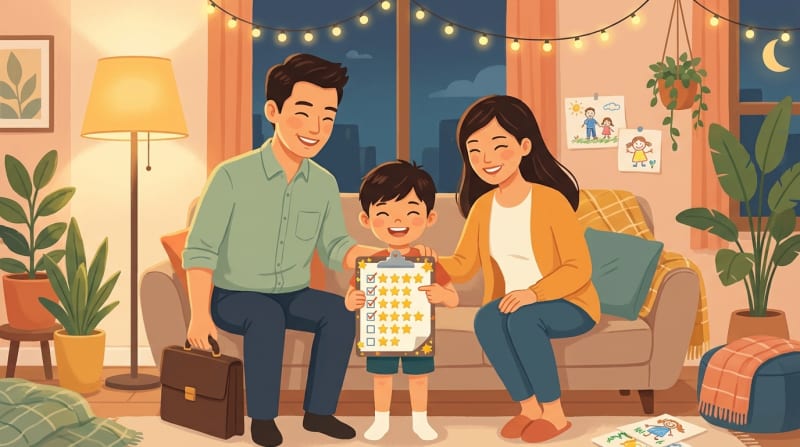
Now, Mom sits back and relaxes watching movies, the child voluntarily completes tasks with excitement, and Dad gets to enjoy a rare, peaceful family atmosphere.
3 Golden Benefits of using Tasky Kid to teach independence
If you are still hesitating, consider the 3 core benefits this method brings:
- Forming good habits: Repeating daily tasks (brushing teeth, cleaning up...) to achieve goals will help children form natural reflexes. After a while, they will do these things out of habit without looking at the app anymore.
- Understanding the value of labor: The child understands that to get their favorite toy or an exciting trip, they must put in the effort to "earn" it, rather than just crying and demanding it.
- Bonding family affection: When the pressure of reminding is removed, conversations between parents and children become much more joyful. Mom plays the role of a companion and rewarder instead of a strict "sheriff."
Advice for parents when starting out
To apply this as successfully as Bin's family did, moms should note:
- Agree on rewards: Sit down with your child and discuss what they want to exchange stars for. The reward must be truly attractive to the child.
- Start small: Don't assign too many difficult tasks right from the start. Let your child enjoy the feeling of victory with simple tasks like putting away toys or taking their bowl to the sink.
- Patience and recognition: Give praise when your child completes a task well on Tasky Kid. Parental recognition is the brightest star of all.
Moms who are having a headache because they have to be a "reminder machine" every day, try letting go of some pressure and let technology support you. An independent child is the greatest happiness for parents, and a happy mother creates a happy family.
👉 Download the app to help your child become independent and receive many offers at: https://taskykid.com
Let Tasky Kid accompany you on the journey of raising happy and responsible children!