Age-Appropriate Chores: The Secret to Raising Independent Kids
The weekend is here again, and a familiar scenario plays out in many households: Parents are busy cleaning the house after a stressful work week, while the kids are "glued" to TV screens, phones, or iPads. Parents want to ask for help but worry their children might break things, or simply won't listen despite repeated requests.
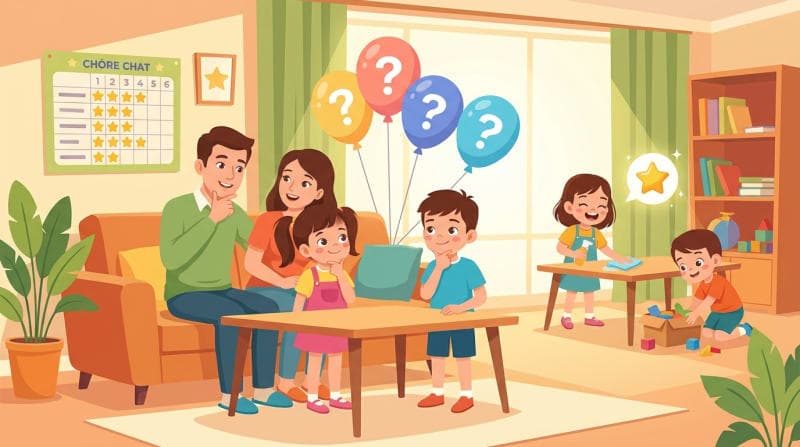
Is there a way to turn days off into meaningful time where the whole family stays active and shares the housework?
The answer lies in "Assigning the right tasks to the right person." The secret to getting your child excited to cooperate isn't force, but giving them age-appropriate tasks—not so hard that they get discouraged, but challenging enough to make them feel useful and grown-up.
In this article, let's join Tasky Kid in exploring a list of chores suitable for each age group and how to turn boring tasks into fun games!
Why assign chores to children early on?
Many parents have the mindset of "let the child focus on studying, mom will handle the housework." However, modern educational studies show that children who do chores from an early age develop better in terms of:
- Sense of Responsibility: Understanding that they are a member with an important role in the family.
- Motor Skills: Honing manual dexterity and body coordination.
- Problem-Solving Skills: Learning how to organize the sequence of tasks logically.
- Gratitude: When they do it themselves, they understand their parents' hard work and appreciate labor more.
Below is a detailed roadmap compiled by Tasky Kid experts:
1. Preschool Group (3-5 years old): Getting used to order
At this age, children love to mimic adults. This is the "golden time" for parents to plant the seeds of neatness. Don't expect perfection; focus on participation and joy.
Suitable tasks:
- Putting toys away: After playing, guide your child to "bring the toys home" (the storage box).
- Sorting dirty laundry: A fun game! Ask your child to put dirty clothes in the basket, or sort them: which are white shirts, which are colored ones.
- Wiping tables or low shelves: A small cloth that fits their hand will make them feel like a real "adult" when wiping spots off the table.
💡 Tip for parents: Turn chores into a song or a racing game. For example: "Let's see who picks up toys faster!". Verbal praise is the biggest reward for children at this age.
2. Primary School Group (6-10 years old): Honing dexterity and patience
Entering primary school, a child's fine motor skills and thinking abilities have developed significantly. Now, parents can assign tasks requiring more precision and the completion of a full process.
Suitable tasks:
- Folding personal clothes: Start with folding face towels and socks, then move to simple clothes.
- Caring for plants: Give your child the responsibility of watering plants on the balcony every morning. This is a great way to teach them about life and discipline.
- Setting the table: Arranging bowls and chopsticks, getting dipping sauces, and handing out napkins before meals.
- Taking out the trash: Collecting trash from rooms and taking it to the family's collection area.
💡 Tip for parents: At this age, children begin to have a need for competency recognition. Say: "Thank you, thanks to you folding the clothes, our wardrobe looks so much neater" instead of immediately pointing out mistakes.
3. Teen Group (11-15 years old): Learning independence and sharing
This is the stage where children prepare to enter puberty, and their personal "ego" is very high. Housework at this point is not just a task but a Life Skill for them to be independent later on.
Suitable tasks:
- Cleaning common spaces: Vacuuming the living room, sweeping, and mopping the floor.
- Handling meals: Washing dishes after dinner or preparing a simple breakfast (fried eggs, bread, cereal) for the family on weekends.
- Operating household appliances: Guiding them to use the washing machine and microwave safely.
- Managing personal items: Changing bed sheets and keeping their study desk tidy.
💡 Tip for parents: Respect your child's schedule. Don't bark orders. Agree on a chore schedule at the beginning of the week so they can proactively manage their time between studying and housework.
The "Golden" Secret: Turning chores into fun with Tasky Kid
We all know the theory, but in reality, maintaining a child's voluntary habit of doing chores is not easy. Children (and even adults) need motivation.
This is where the Tasky Kid app becomes a powerful assistant for parents:
- Digitize the chore chart: Instead of nagging until your mouth is dry, parents set up a to-do list on the app. The child just needs to open the device to know what needs to be done today.
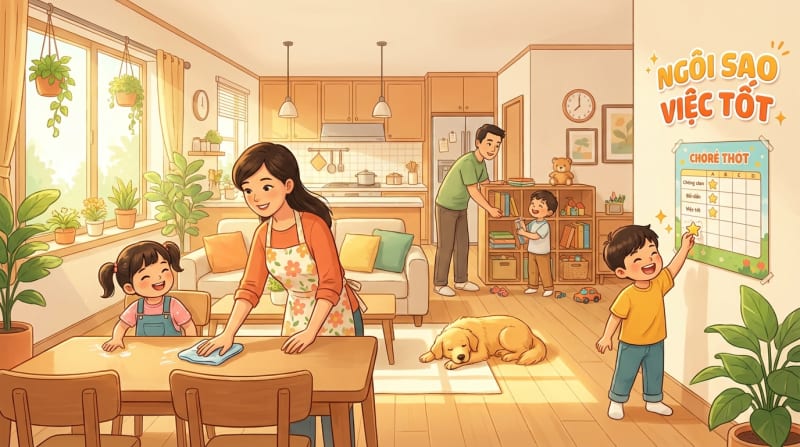
- "Star" Accumulation Mechanism ⭐: Every completed task brings not only praise but also converts into a specific number of stars. For example: Washing dishes = 5 stars, Watering plants = 3 stars.
- Redeeming attractive gifts: This is the part kids look forward to the most! Accumulated stars are used to exchange for rewards set by parents themselves:
- 50 stars = 1 hour of TV.
- 100 stars = A trip to the bookstore.
- 200 stars = A toy they like.
This method not only helps children get excited about working but also teaches them an early lesson in finance: "To get what you like, you have to work to accumulate it."
Conclusion
Teaching children to do housework is a long journey requiring patience. Don't just click your tongue and say "let mom do it for speed" because you see them doing it clumsily. Give your child the opportunity to fail, to correct, and to grow.
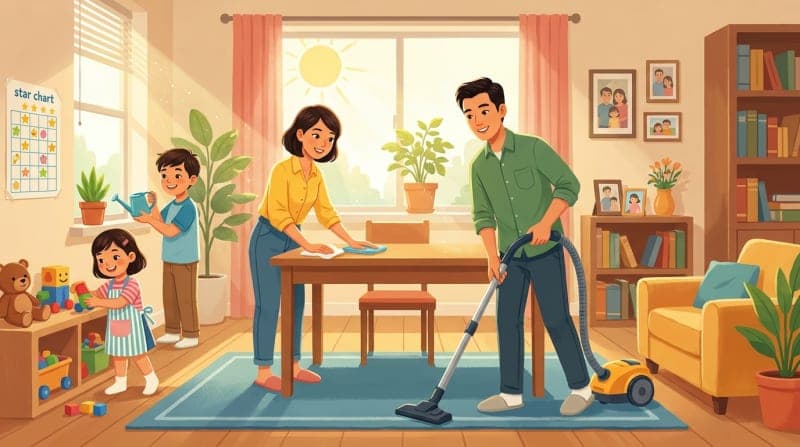
This weekend, instead of everyone sitting in a corner with a phone, let's divide the work, turn on some upbeat music, and clean up the home together. Don't forget to download Tasky Kid to make this journey easier and more interesting than ever!
👉 Download the app and create a free account now at: https://taskykid.com
Let Tasky Kid accompany parents in raising independent, responsible, and happy children!
🌟 Get Tasky Kid Now
Help your child build good habits with a chore management app for kids!
Download for Free