Why Does Your Child Still Forget Despite Constant Reminders? Decoding the Psychology
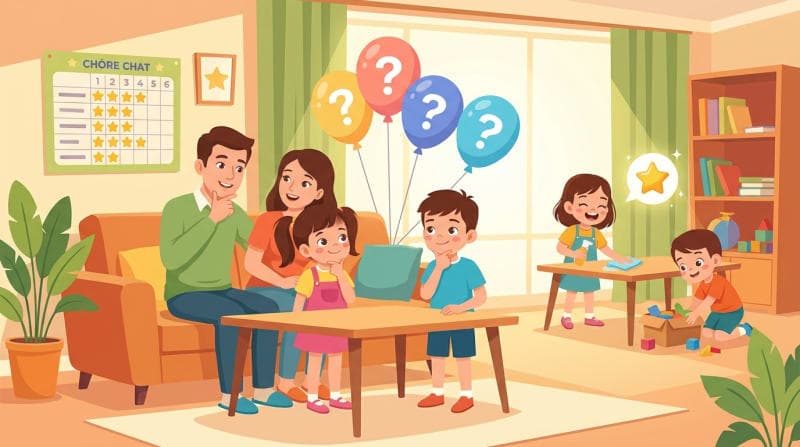
Have you ever found yourself in this ironic and frustrating situation: You ask your child to go into their room to get a jacket, put a comic book on the shelf, and turn off the light. The child obediently agrees, runs into the room, but 5 minutes later comes out with... a toy in hand, having completely forgotten everything Mom just said?
Many parents confess feeling helpless, or even angry, assuming their child is lazy, lacking focus, or deliberately being defiant. Scolding phrases like "How many times have I told you?" or "Why won't you pay attention?" become a daily refrain in the family.
But wait—before scolding your child, take a deep breath. The truth is, the cause lies not in your child's attitude, but in how their brain receives and processes information.
1. The Mystery of a Child's "Short-Term Memory"
To understand why your child forgets, we need to understand Working Memory. Imagine an adult's working memory as a large bucket that can hold and process multiple pieces of information simultaneously. But for children, especially those under 10, this bucket is only the size of a small cup.
When parents give a string of verbal commands (e.g., "Put away your bag, wash your hands, then come eat dinner"), this flow of information is like pouring water into the child's small cup.
- "Put away your bag" - Cup is 1/3 full.
- "Wash your hands" - Cup is 2/3 full.
- "Come eat dinner" - The water overflows.
The result is that the child often only remembers the first or the last task, and "drops" the information in the middle. This is a natural biological limit of a developing brain, not your child's fault.
2. Words "Fly Away" - Children Are Visual Learners
Educational psychology studies indicate that the majority of children are Visual Learners. This means their brains process images faster and retain them many times longer than sound (speech).

Parents' words are auditory information, which is abstract and temporary. As soon as you finish speaking, the sound disappears. If the child is engrossed in building Lego or watching cartoons, those words will slip right through their ears like a passing breeze without leaving a trace in the brain's information processing center.
In contrast, images are concrete and permanent. A drawing of a boy brushing his teeth will always be there, reminding the child of the task at hand without parents needing to make a sound.
3. The Power of "Visualizing" Tasks
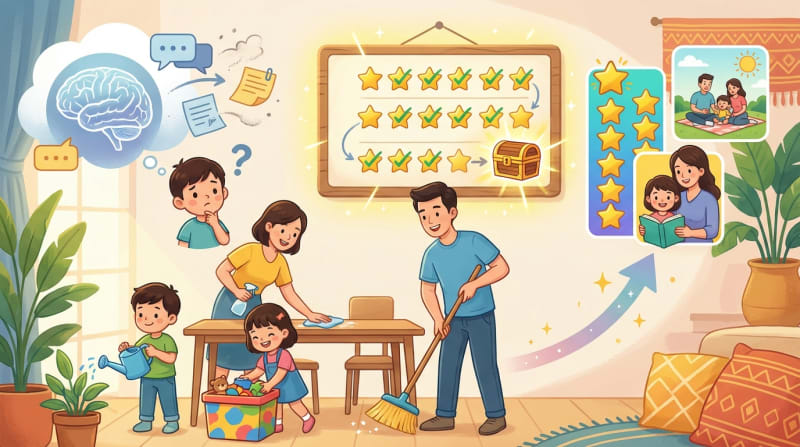
When parents switch from "verbal reminders" to using a Checklist or illustrations, they are providing their child with an "External Memory." This tool offers 3 enormous psychological benefits:
Reducing Brain Load
Instead of straining to remember "What did Mom ask me to do?", the child just needs to look at the task board. This frees up brain energy, helping the child focus on executing the task rather than remembering it.
Creating a Sense of Control and Peace of Mind
Children often feel anxious or annoyed when constantly reminded by adults. Being nagged makes them feel passive. Conversely, a task list allows the child to self-check and mark off what they have done. This sense of ownership (Autonomy) is the strongest internal motivation for self-discipline.
Visualizing a Clear Sequence
For young children, concepts of time and sequence are very vague. A top-down visual list helps the child understand the process: After finishing task A comes task B. This forms logical thinking and planning skills from an early age.
4. Smart Solution: Turning Dry Tasks into Fun Games
Understanding this psychology, changing the way we educate our children is essential. Instead of "reminding until your mouth is tired," try applying the rule "Talk less, Write/Draw more."
However, in the digital age, drawing paper charts can sometimes be time-consuming and hard to track. This is where technology shines. Using task management apps designed specifically for children like Tasky Kid serves as the perfect bridge between parents and children.
With Tasky Kid, dry reminders disappear, replaced by:
- Vivid Images: Every task (brushing teeth, cleaning up toys, doing homework) is illustrated with cute icons, easy to understand even for toddlers who cannot read yet.
- Instant Reward System: When the child completes a task and checks the "Done" box, the app awards stars or bonus points. Dopamine (the happiness hormone) is released, making the child excited to do the next task.
- Gentle Reminders: Instead of Mom's shouting, a pleasant chime from the app serves as the signal for the child to start their work.
Conclusion
Don't let battles over chores or daily routines chip away at family affection. When your child forgets instructions, remember that this is when they need a memory aid, not a scolding.
Help your child build habits of independence by "visualizing" everything. When tasks become clear and fun, your child will self-motivate to do them happily. That is the key to Pressure-Free Parenting.
Are parents ready to help their children upgrade their "memory"?
📲 Download Tasky Kid and experience it for free today to turn chores into joy: https://taskykid.com