The Secret to Ending Sibling Rivalry and Getting Kids to Do Chores Voluntarily
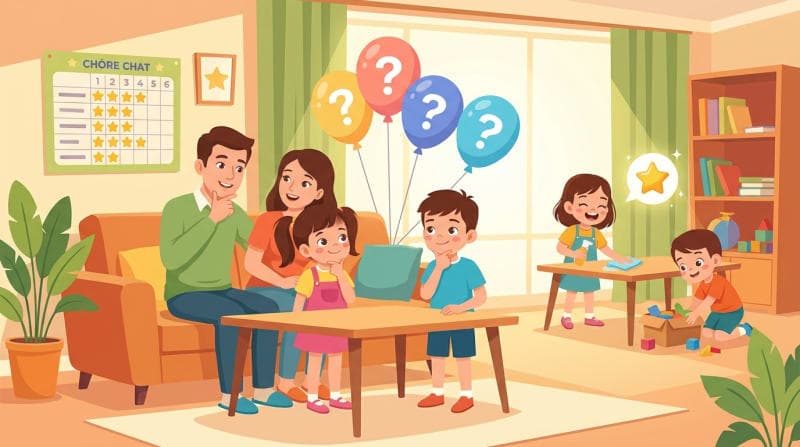
"Mom, you love him more!", "Why do I have to do more work than my brother?", "Why does he get to watch TV while I have to wash dishes?"...
Do these questions echo through your house every day? If the answer is "Yes," then please know that you are not alone. Millions of other mothers are also suffering headaches every evening trying to mediate endless arguments between the "tiny leaders" of the family.
Sibling rivalry is a normal psychological issue, but if not handled skillfully, it can turn the family atmosphere into a tense "battlefield" where parents are exhausted from playing referee, and children feel resentful due to a perceived lack of fairness.
So, how can you turn these arguments into joyful cooperation? Let's listen to the interesting story of how Ms. Lan Anh (Hanoi) "escaped the referee role" and discover the technological solution that modern parents are trusting.
The Obsession Called "Mom is Biased!"
Ms. Lan Anh's family has two boys, 3 years apart. An "ideal" age gap for playing together, but close enough to spark countless conflicts.
"My house used to be like a chaotic marketplace every day," Ms. Lan Anh confides. "The older one, Minh, always complained that his younger brother Bon did less work but still got praised. Bon would scream that Minh had it better because he got to watch TV later. I stood in the middle, trying to judge, feeling like my head would explode. Many times, coming home tired from work with the kids whining in my ears, I couldn't control myself and ended up shouting at both of them. The result was mom crying, kids crying, and an extremely heavy atmosphere."
The core issue here is not that the children are lazy, but their sense of fairness. Children are very sensitive to who does more and who gets more. When everything is only agreed upon verbally ("Go wash the dishes," "Clean up your toys"), children easily forget or feel vague about their responsibilities compared to their siblings.
When Technology Becomes the "Savior" of Family Peace
Seeing his wife under constant stress, Ms. Lan Anh's husband researched and decided to apply technology to family management. They tried downloading Tasky Kid – a task management and reward application designed specifically for children.
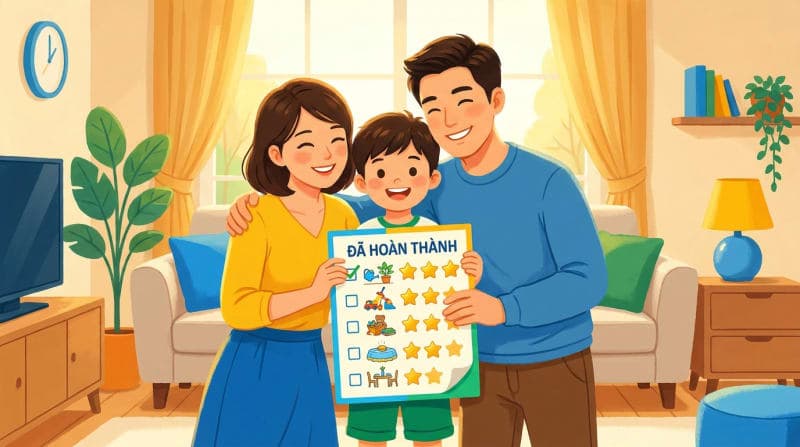
"At first, I was hesitant to use an app, thinking it would be complicated and fussy. But it turned out to be the best decision of the year," Ms. Lan Anh says with a smile.
Instead of shouting herself hoarse, Ms. Lan Anh started "digitizing" all housework onto the app:
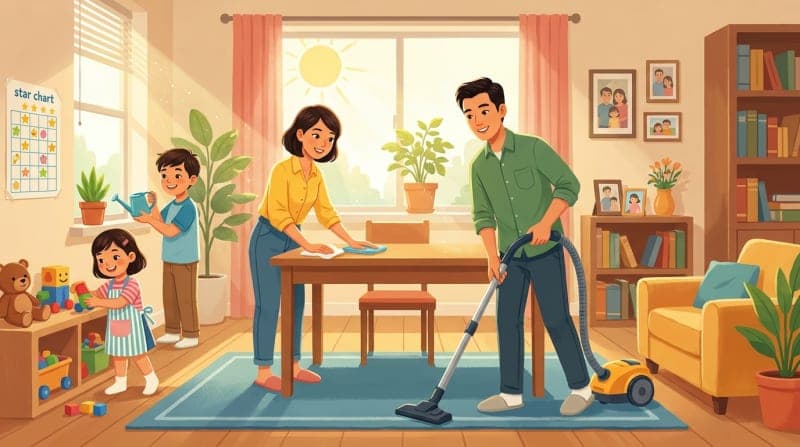
- Clear division by age: Minh is older, so he is in charge of tasks requiring more strength and skill, like washing dishes, taking out the trash, and wiping the dining table. Little Bon is responsible for cleaning up the toy area and folding his own clothes.
- Transparent benefits: Each task is assigned a specific number of stars ⭐ right on the screen. Hard tasks get many stars, easy tasks get fewer.
- The Timekeeper: No one can be jealous anymore because the "machine" has set the rules. Finish a task, tick it off, and stars automatically fly into the child's account.
Surprising Results After 2 Weeks
The change didn't happen immediately on the first day, but after about 2 weeks of persistence, Ms. Lan Anh's family witnessed a spectacular "transformation."
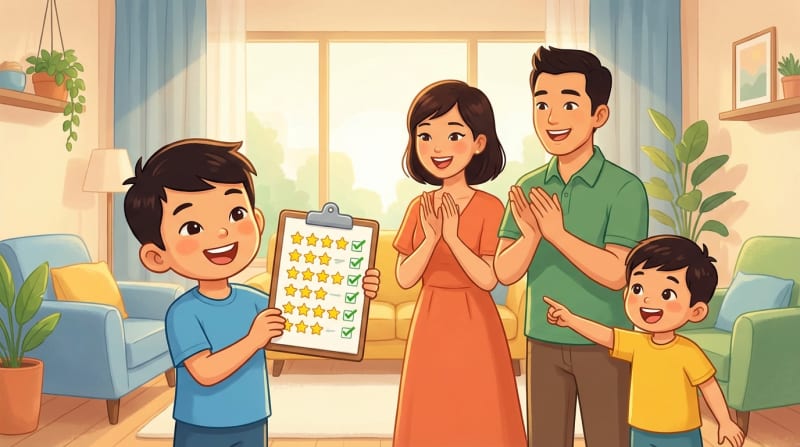
Instead of arguing about who had to do what, the two brothers turned to competing in "star hunting." Why the change? Because Ms. Lan Anh applied a smart reward exchange mechanism on Tasky Kid:
- Right to choose: On weekends, whoever accumulates enough required stars gets the right to choose the outing location for the whole family or exchange them for movie tickets or book vouchers.
- Lessons on labor: The children understand that to have privileges (watching TV, going out, buying new toys), they must work to accumulate them. There is no longer a concept of "crying loud gets you gifts."
"Thanks to Tasky Kid, the children learn responsibility and understand the value of labor. Mom also has fewer wrinkles because she doesn't have to be the referee anymore," Ms. Lan Anh excitedly shares.
3 Secrets to End Chore Jealousy Between Siblings
From Ms. Lan Anh's story, we can draw 3 valuable lessons to apply to our own families:
1. Age-appropriate chores
Don't make a 5-year-old do a 10-year-old's work and vice versa. Fairness doesn't mean doing exactly the same thing, but doing what is suitable for one's ability.
- Children 4-6 years old: Put away toys, put dirty clothes in the hamper, brush teeth independently.
- Children 7-10 years old: Sweep the house, fold clothes, wash dishes, water plants.
- Children over 10 years old: Cook simple meals, clean the bathroom, use the washing machine.
2. Visualize progress and rewards
Children think in images. Spoken words fly away, but an achievement board (or an app like Tasky Kid) clearly displaying stars and points serves as "iron evidence" helping the child see what they have achieved. When they see their "treasure" of stars increasing, their motivation to work will be exponentially higher compared to mom's reminders.
3. Be consistent and keep promises
If the rule is 50 stars to go to the movies, make sure you follow through when the child achieves it. If the child doesn't do the work, absolutely no reward. Parental consistency is the key for children to respect the rules of the game and stop the mentality of jealousy or whining.
Conclusion
Teaching children to do housework is not just about sharing the burden with parents, but more importantly, it teaches children about responsibility and independence skills. Don't let arguments erode family joy.
Try applying the method of transparent work and rewards like Ms. Lan Anh's family. You might be surprised to see those "little kings" suddenly become capable assistants who know how to love and share with each other more.
Parents, are you ready to "liberate" yourselves and help your children grow?
👉 Experience the Tasky Kid app for free at: https://taskykid.com
Let Tasky Kid accompany parents in building a happy family, where housework is a joy, not a burden!