Sibling Rivalry Over Chores: The Ultimate Trick to Set Mom Free
"Mom, why do I have to wash the dishes while he only has to wipe the table? It's so unfair!"
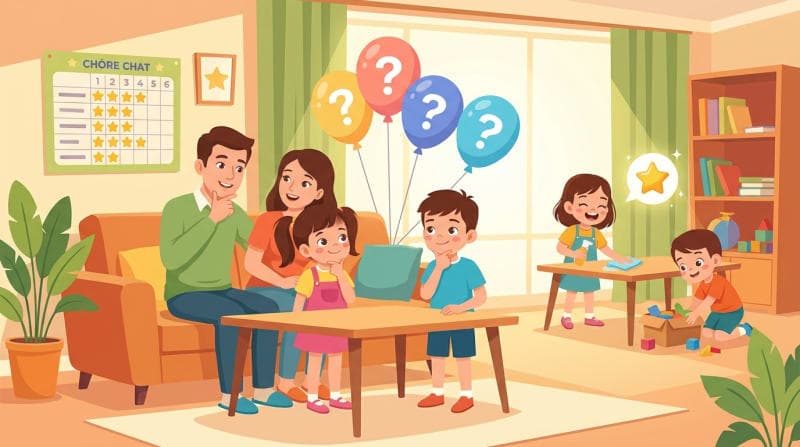
Does this phrase sound familiar to you? If your family has two or more children, you have undoubtedly suffered through a "cold war" or heated arguments between siblings at least once, simply over the division of housework.
Ms. Lan, a mother of two boys (ages 8 and 11), used to fall into a state of extreme stress because she had to play "judge" every single day. The scene of two brothers bickering, comparing who did more, or arguing about who Mom spoiled more made the family atmosphere constantly tense.
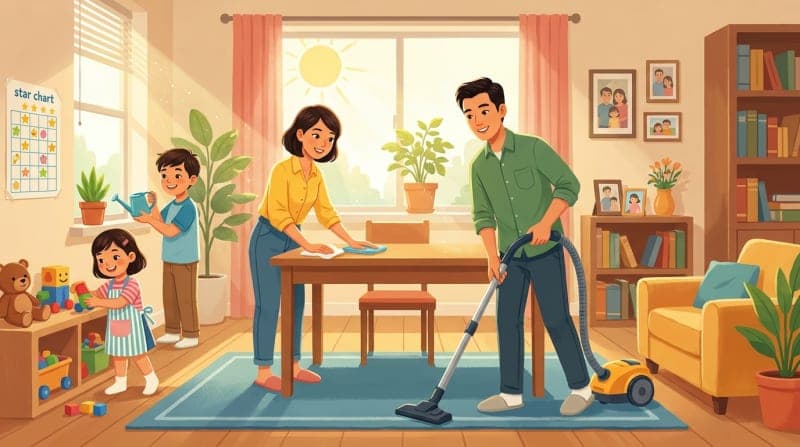
However, everything changed completely thanks to a new management method. This article will share the journey from "battlefield" to "peace" in Ms. Lan's family and how you can apply it today so your children become more self-disciplined and loving toward each other.
Why do children often get jealous over chores?
Before finding a solution, we need to understand child psychology. This rivalry doesn't necessarily stem from laziness, but deeper down, it is a need for fairness.
Between the ages of 6 and 12, children begin to form a strong sense of "self" and equality. However, a child's ability to assess workload is not yet fully developed. In the eyes of Ms. Lan's youngest son, the act of "washing a basin of dishes" and "wiping a table" seemed similar in terms of action, but he felt washing dishes was "dirtier" and "took longer," leading to a feeling of being treated unfairly.
When parents give general verbal commands like: "You two clean the house," children will immediately compare to see who is doing less so they can... do less to match.
Parents' Mistake: Becoming the Reluctant "Judge"
Most parents, upon seeing their children arguing, choose to intervene immediately:
- "You're the older brother, do more!"
- "He's still little, just yield to your brother a bit."
- Or worse, Mom does it herself to end the noise: "Fine, leave it there, I'll do it all! Stop arguing!"
This solution is only temporary. In the long run, it creates a dependency mindset for the younger child and a sense of frustration for the older one. Mom is exhausted, and the children still haven't learned how to share responsibility. This was the deadlock Ms. Lan faced for a long time.