Why Is Your Child Stubborn? The Psychological Secret of Autonomy
In the journey of parenting, parents likely often feel helpless in situations that leave them at their wit's end. Rushing to leave for work in the morning, but your child refuses to wear the shirt you chose. In the evening, you remind them to pick up their toys, but they pretend not to hear or sullenly throw things around.
We often label these actions as "stubborn," "difficult," or "rebellious." However, if we look deeper through the lens of child psychology, this behavior doesn't necessarily stem from a desire to oppose parents. It is actually a cry for help regarding the need for self-assertion.
This article will help parents decode the psychology behind that "stubbornness" and provide a gentle yet extremely effective strategy: Handing over control.
1. Decoding Psychology: Why do children "resist"?
Modern psychology points out that, whether it is a 3-year-old going through the "terrible threes" or a 13-year-old in puberty, humans always have a basic and powerful psychological need: The need for Autonomy.
Try putting yourself in your child's shoes:
- Morning wake-up: Woken up by others (can't sleep in).
- Breakfast: Must eat what Mom cooked (can't choose).
- School: Must wear a uniform, sit still in class.
- Home: Must do homework, take a bath, go to bed on time.
When a child feels their life is "programmed" and ordered by adults 100% from morning to night, their brain activates a natural defense mechanism. "Stubbornness" at this point is the child's last effort to regain a bit of control over their own life. They resist not because they hate their parents, but to protect their ego.
2. The Golden Strategy: Giving choices within a framework
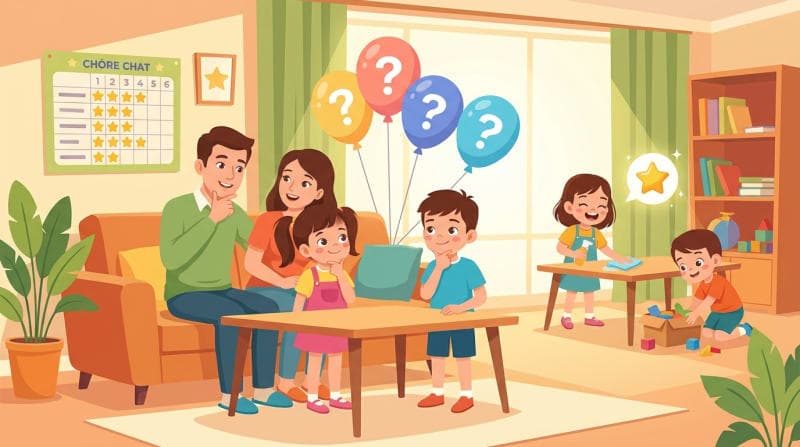
So how do you get your child to listen without shouting or using corporal punishment? The answer lies in changing how you communicate. Instead of giving orders (imposing), give your child the power to choose (empowering).
However, empowering doesn't mean spoiling them or letting them do whatever they want. This is the art of "Choice within a framework." Parents still set the boundaries, but the child decides how to execute tasks within those limits.
Real-life examples:
-
Cleaning the room:
- ❌ Order: "Clean up this pile of toys right now!" (Child feels forced).
- ✅ Empower: "The room is quite messy. Do you want to put the books on the shelf first or gather the dirty clothes into the basket first?" (Child feels they are the decision-maker regarding the sequence).
-
Eating vegetables:
- ❌ Order: "Eat all that bowl of vegetables!"
- ✅ Empower: "Do you want boiled broccoli or stir-fried carrots today?" (Whatever they choose, they still eat veggies, but they are happy because they got to choose).
-
Doing homework:
- ❌ Order: "Sit at your desk immediately!"
- ✅ Empower: "Do you want to rest for another 10 minutes and then study, or study right now so you can watch TV earlier later?"
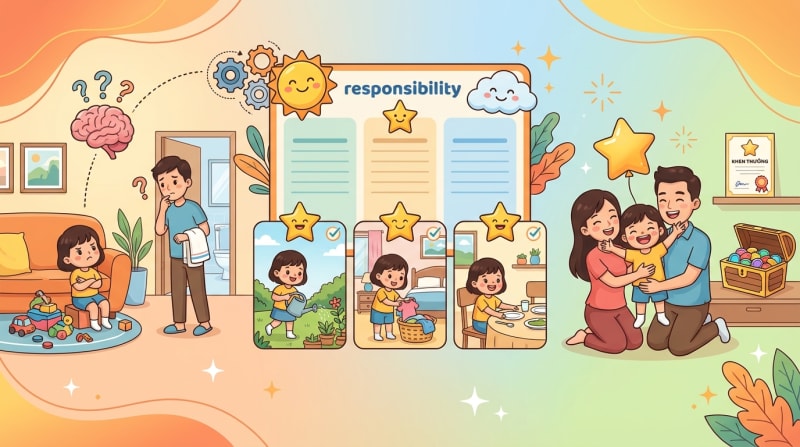
When allowed to decide for themselves, the child's mindset shifts from "a victim being bossed around" to "the owner of the task." The feeling of being trusted stimulates the brain to produce Dopamine, helping the child work with much more enthusiasm and responsibility.
3. Long-term benefits of granting autonomy
Applying this method not only resolves immediate conflicts but also brings immense benefits to the development of the child's personality:
- Practicing decision-making skills: Children learn to think and take responsibility for their choices.
- Boosting confidence: When their opinions are respected, children become more confident in their own abilities.
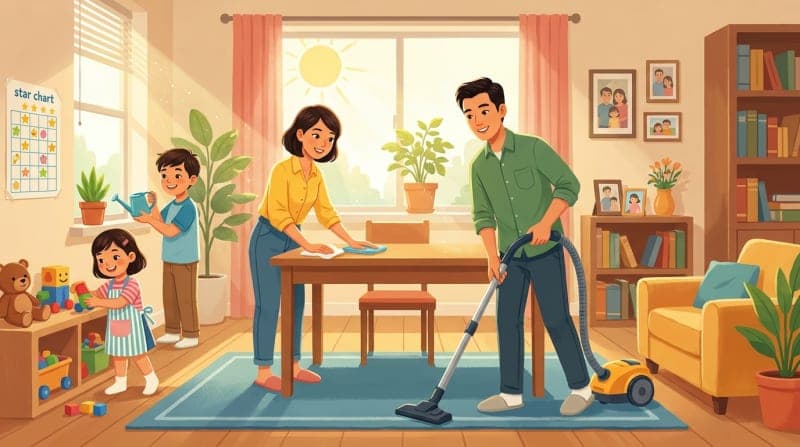
- Reducing family conflict: The family atmosphere becomes lighter when there is no more shouting or coercion.
- Developing an ownership mindset: This is a crucial foundation for the child to become an independent and proactive adult in the future.
4. Tasky Kid - A powerful tool to help children practice proactivity
Understanding the philosophy of autonomy, Tasky Kid was created not just as a reminder app, but as a companion helping parents empower their children in a civilized and modern way.
Instead of parents playing the role of a "nagging machine" all day, let Tasky Kid help your child manage their own life:
- Separate Account: The child has a private space to view their daily to-do list. Seeing a visual list helps them clearly visualize what needs to be done without verbal reminders from parents.
- Freedom to Arrange: Within the framework of tasks assigned by parents, the child can choose which task to do first or last depending on their interest.
- Sense of Achievement: The act of personally ticking the "Completed" box on the app brings a great sense of satisfaction to the child. It is instant recognition of their effort.
- Goals and Rewards: The child gets to participate in choosing the goal reward (a toy, a trip, etc.). This turns boring chores into steps toward conquering their dreams.
Conclusion
"Stubbornness" is not a bad habit; it is a sign that your child is yearning for growth and independence. Instead of extinguishing that fire with imposition, parents should skillfully transform it into motivation by granting the child appropriate control.
Let your child be the "captain" steering their own small tasks starting today. And don't forget, Tasky Kid is always ready to be a powerful assistant helping parents and children on this exciting journey of practicing proactivity.
👉 Download the app and experience it for free now so your child becomes self-disciplined and Mom can relax: taskykid.com
🌟 Obtenez Tasky Kid Maintenant
Aidez votre enfant à prendre de bonnes habitudes avec une application de gestion des tâches pour enfants !
Télécharger Gratuitement