The Secret to Getting Kids Excited About Chores Using Dopamine
Have you ever wondered: Why do we adults feel incredibly satisfied when we can cross off (check) a completed item on our to-do list? That feeling is relieving and exhilarating, isn't it?
Conversely, why is it that when chores are mentioned, children often appear sluggish, procrastinate, or even resist? Is the child simply lazy?
The answer does not lie in the child's personality, but in the brain's operating mechanism. Science has proven that excitement or boredom is strongly governed by a hormone called Dopamine.
In this article, let's join Tasky Kid in discovering the secret of Dopamine and how parents can apply behavioral psychology to turn chores into a daily joy for their children.
1. Dopamine: The "Fuel" of Motivation and Joy
Before diving into solutions, we need to clearly understand the "main character" in this story: Dopamine.
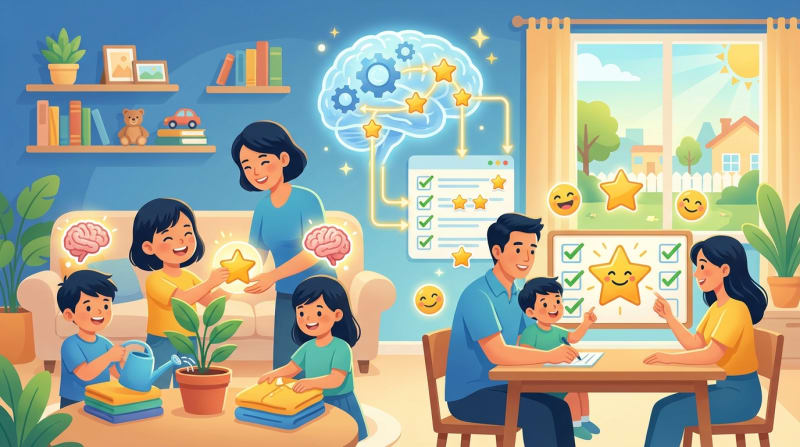
Dopamine is often called the "happiness hormone" or the "reward hormone." When we complete a specific task, the brain releases this neurotransmitter. It creates a feeling of pleasure, achievement, and most importantly, compels humans to repeat that action to receive more emotional rewards.
This is exactly why children (and adults too) are often easily addicted to video games. In games, tasks are always clear, short-term, and rewards (leveling up, getting coins, the "ding" sounds) appear immediately. The child's brain is constantly "bathed" in Dopamine.
In contrast, chores are often tedious, prolonged, and the reward (a clean house) is not immediate. So how do we "hack" the brain to help children find joy in labor just like when playing games?
2. The Classic Parenting Mistake: "Giant" Commands
Let's recall how we usually assign tasks to our children. do parents often say things like:
- "You must be good!"
🌟 Obtenez Tasky Kid Maintenant
Aidez votre enfant à prendre de bonnes habitudes avec une application de gestion des tâches pour enfants !
Télécharger Gratuitement