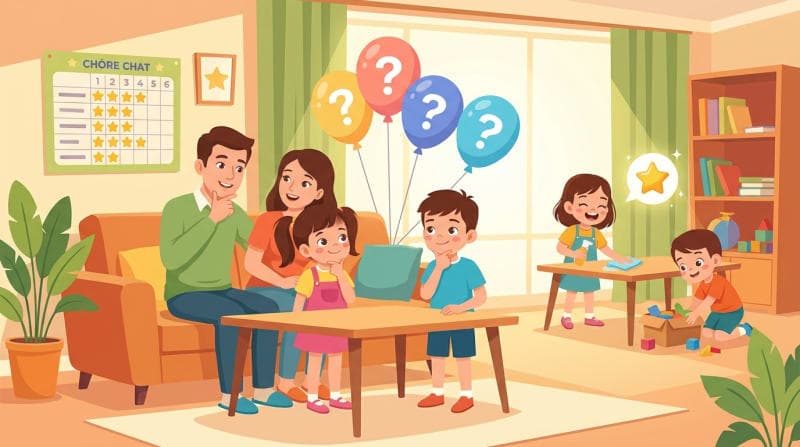
Teaching Kids About Money: Turning Chores Into Their First Financial Lessons
"Mom, buy me that Lego set!", "Dad, I want a new bike!"...
Perhaps every parent has faced this awkward situation at least once: Standing in the middle of a supermarket or toy store, facing the pleading eyes (or even a full-blown tantrum) of their child. In these moments, parents usually react in two common ways: One is to reluctantly pull out their wallet just to end the scene, and the other is to flatly refuse and deliver a long lecture about how "we don't have money" or "you already have too many toys."
However, neither approach is truly optimal for developing a child's mindset. Instead of simply saying "Yes" or "No," why don't parents turn this situation into a golden opportunity to teach their child about finance and the value of labor?
Try a fresher approach: "This toy is worth 50 stars. Do you want to make a plan with Mom to earn enough stars for it?"
This is when we apply the "Token Economy" model right at home, turning boring daily chores into invaluable first lessons in finance.
1. The "Token Economy" - When Chores Are Not Just Obligations
In the adult world, we go to work, receive a salary, and use that money to buy what we need. For children, the concept of "money" is quite abstract. Therefore, "stars," "reward points," or "coupons" are the most suitable currency for their age group.
Setting up a chores-for-stars exchange system (on paper or via an app like Tasky Kid) helps children clearly visualize the operating process of a miniature economy:
- Labor (Chores) = Income (Stars/Reward Points).
- Accumulated Income = Rewards (Toys/Books/TV Time).
When applying this method, parents not only help children form the habit of doing chores voluntarily but also plant the seeds of important financial mindsets.
2. Lesson #1: Understanding the Value of Labor
🌟 Obtenez Tasky Kid Maintenant
Aidez votre enfant à prendre de bonnes habitudes avec une application de gestion des tâches pour enfants !
Télécharger Gratuitement