Making the Most of Weekends: The "Golden Time" to Teach Your Child New Skills
In the hustle and bustle of modern life, Monday through Friday often feels like a "race" for the whole family. Parents are busy with office work, while children are caught up in school schedules and extra classes. In this context, housework is often done by parents just to get it over with or done for the children to save time.
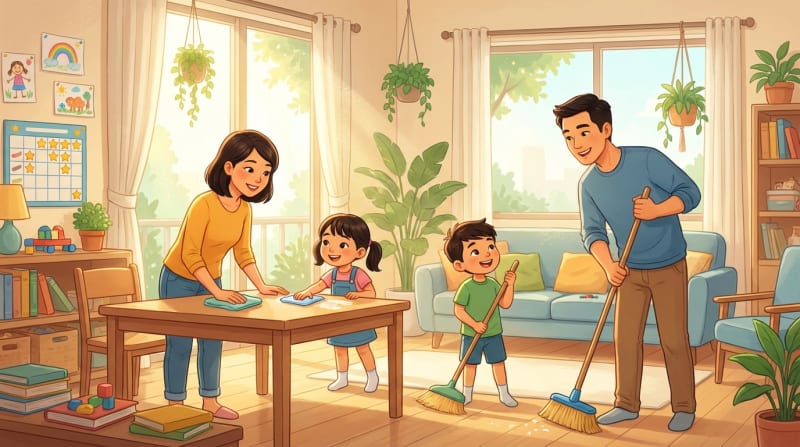
However, do parents realize that this haste inadvertently deprives children of the opportunity to practice independence? The weekend is the most ideal time – a "golden time" – for parents to slow down and patiently guide their children through new skills. Instead of just letting your child bury their head in the TV or phone, turn the two days off into interesting and useful life skills "training sessions."
The article below suggests a roadmap for upgrading household chores for children by age and how to turn this into a joy rather than a burden.
Why are weekends the best time to teach your child?
On weekdays, time pressure (having to get to school on time, having to go to bed early) causes parental patience to decrease. When learning a new skill, a child will be slow, make mistakes, or even break things. If this happens on a rushed Tuesday morning, it can easily lead to scolding and stress.
In contrast, weekends offer 3 core elements for successful teaching:
- Ample Time: Allows the child to make mistakes and correct them without being rushed.
- Relaxed Mindset: Both parents and children are more relaxed, making it easier to connect and talk.
- Companionship: Parents can work alongside their children, turning housework into family bonding time.
Below is a list of "upgraded" chores suitable for parents to guide their children through this weekend.
1. Preschool Age (3-5 years old): Learning through play
At this age, children love to imitate adults and want to prove they are "big." The goal is not perfection, but building habits and manual dexterity.
-
Wiping up spilled milk or water: Instead of rushing to grab a towel as soon as your child spills water, calmly hand them a small towel. Guide them on how to absorb the water and wipe it dry. This teaches the lesson of responsibility: whoever causes the mess handles the consequences (in a gentle way).
-
Sorting socks (stockings) into pairs after laundry: This is a great game to practice logical thinking and observation skills. Parents can dump a pile of socks on the floor and challenge the child to find matching pairs the fastest. This activity helps develop sorting and color/pattern recognition skills.
-
Watering low indoor plants: Give your child a small spray bottle or a small cup of water. Caring for plants helps nurture a love for nature and teaches meticulousness and gentleness to avoid breaking leaves or overwatering.
2. Primary School Age (6-10 years old): Honing dexterity
Entering primary school, children have better gross and fine motor skills. This is when parents should "upgrade" the difficulty of tasks, requiring hand-eye coordination and specific processes.
-
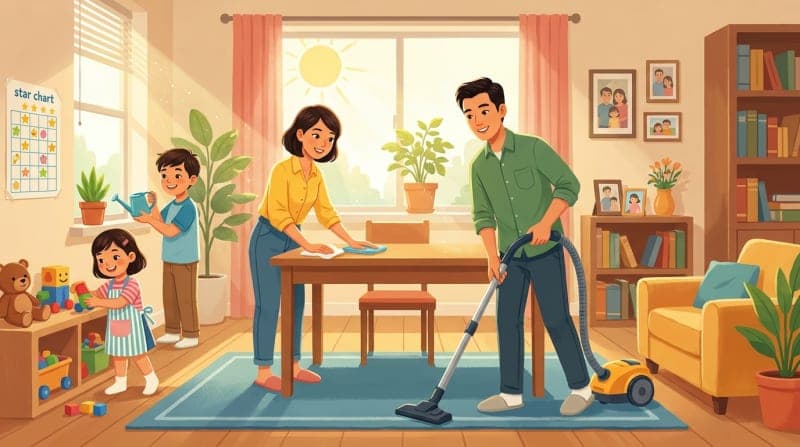
Vacuuming the living room or their own bedroom: Using a vacuum cleaner often makes children feel excited, like using a high-tech toy. Guide your child on how to move the machine so as not to miss any corners. This trains carefulness and coverage.
-
Changing pillowcases (with parental support): Removing old pillowcases, putting on new ones, and smoothing out the bedsheets are tasks that require a certain amount of strength and dexterity. Completing this will help children appreciate sleep and maintain better personal hygiene.
-
Helping mom prep vegetables for lunch: Weekends are when the kitchen warms up with more elaborate dishes. Let your child participate in picking vegetables, washing fruits, or using a safe knife (kid-friendly) to cut soft root vegetables. This is a great opportunity for parents to teach their children about nutrition and the hard work of the cook.
3. Teenage Years (11-15 years old): Preparing for independence
In the pre-teen and puberty stages, children need to be equipped with essential life skills to take care of themselves when parents are away or to prepare for living away from home in the future.
-
Operating the washing machine and hanging clothes correctly: It's not just pushing a button; teach your child how to separate colored and white clothes, the amount of detergent needed, and how to hang clothes so they dry quickly and don't wrinkle. This is a basic survival skill.
-
Cooking a complete dish for the family: Start with simple dishes like fried eggs, vegetable soup, or boiled meat. Parents should play the role of "assistant" and let the child be the "head chef." The feeling of watching the whole family enjoy a meal cooked by their own hands will make the child much more confident in themselves.
-
Scrubbing the sink or toilet: This is usually a task no one likes, but it teaches children a lesson about humility and hygiene standards. A teenager who knows how to keep the bathroom clean will certainly be a person with a civilized and tidy lifestyle.
The secret to getting kids excited: Don't Order, "Reward"
The reality is, even on weekends, not every child is excited to leave the iPad screen to go... scrub the toilet or pick vegetables. If parents use commands or force, the family atmosphere will become tense.
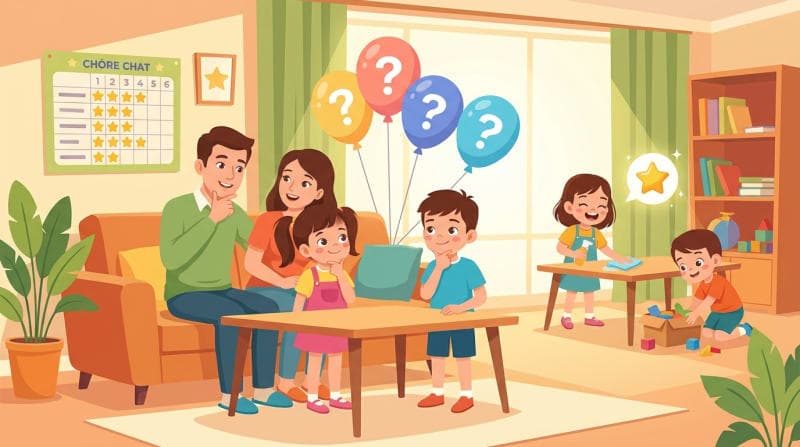
The smart solution for modern parents is to apply Gamification to chores through the Tasky Kid app.
Set up the "Star Reward" system today:
- Clear Agreement: Sit down with your child and agree on how many Stars they will receive if they learn this new skill (e.g., cooking lunch by themselves).
- Assign on App: Parents create the task on Tasky Kid, set the deadline for the weekend, and include fun illustrations.
- Verify and Award Stars: When the child finishes, inspect (positively), praise their effort, and tap confirm completion on the app. The "ding" sound of adding Star points will be a dose of dopamine to get the child excited.
- Exchange Gifts: Accumulated Stars can be exchanged for gifts the child likes (a movie trip, buying a new comic book, or an extra 30 minutes of gaming).
Using Tasky Kid not only helps parents manage tasks but also turns responsibility into an exciting treasure hunt. The child will understand that: Labor creates value and worthy rewards.
Conclusion
Teaching children to do housework is a long journey requiring patience; success doesn't happen overnight. Take advantage of leisurely weekends to guide your child step by step, turning small skills into solid baggage for their entry into life.
Don't forget, you are not alone in this journey. Let Tasky Kid become a powerful assistant helping parents assign tasks and encourage children every day.
👉 Download the app and start setting up "Weekend Missions" for your child right at: https://taskykid.com
🌟 Obtén Tasky Kid Ahora
¡Ayuda a tu hijo a desarrollar buenos hábitos con una app de gestión de tareas!
Descargar Gratis