Kids Bickering Over Chores? The Secret Weapon for Stress-Free Parenting
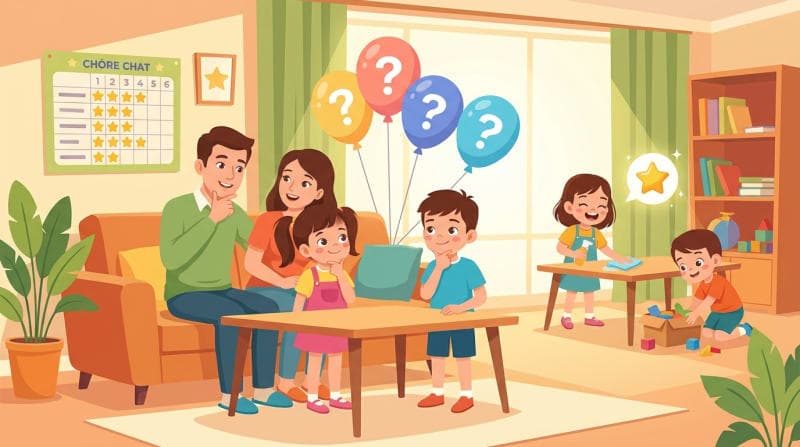
"Why doesn't Soc have to do it but still gets to go out?", "Mom favors Nhim!", "But I did the dishes yesterday!"...
Do these "accusations" sound familiar? If you are nodding your head, welcome to the club of parents with a headache caused by children bickering every day.
The story of Soc (10 years old) and Nhim (6 years old) in this article is likely a common picture in many families. Housework isn't just about cleaning; it inadvertently becomes a "battlefield" where children compare their parents' love and fairness. So, how can we eliminate jealousy and help children voluntarily do chores without Mom being labeled a "biased judge"?
Let's explore the "magical" secret that changed our family atmosphere in just 2 weeks!
1. The misery of the reluctant "Judge"
As parents, everyone wants their children to get along and love each other. But the harsh reality is that as soon as housework is mentioned – from who sweeps the floor, who cleans up toys, to who folds the blankets – "war" breaks out.
The core issue lies not in the child being lazy, but in the sense of fairness.
Children are very sensitive. When Soc sees that he has to wash dishes while his younger sister Nhim is watching TV, he feels it is unfair. Conversely, if Nhim sees Soc going to play soccer while she has to put away shoes, she thinks Mom spoils her brother more.
And what is our biggest struggle? It is that we often forget.
- "Who wiped the table yesterday?"
- "Did Soc get a reward last week yet?"
Because memory cannot be 100% accurate, parental rulings are sometimes emotional. And with just one mistake, in the eyes of the children, you have become a "biased mother." The family atmosphere is always tense with the sounds of arguing and envy.
2. When words fail, use "Law" and Technology
I used to try every method: from gently advising "siblings must love each other," to strictly scolding, and even threatening. But it all only worked for... 30 minutes. Then it was back to square one.
I realized: To be fair, everything must be transparent. Words are forgotten, but numbers and images do not lie.
That was when I decided to apply a new "law" through the Tasky Kid app. Instead of shouting, I digitized all the tasks in the house.
Converting every effort into "Stars" ⭐
With Tasky Kid, every task, no matter how small, has value.
- Brushing teeth and washing face: 1 star.
- Folding blankets neatly: 2 stars.
- Washing dishes cleanly: 5 stars.
- Cleaning the study corner: 3 stars.
This conversion table is made public for both Soc and Nhim. The rules are very simple: Do more, get more; no work, no stars. No one can deny it, and Mom can't "cheat" for anyone either.
3. Surprising effectiveness: From bickering to competition
After 2 weeks of applying this method, the results truly amazed my husband and me. The change didn't come from forcing the kids, but from their own psychology.
Transparency clears doubts
On the Tasky Kid app, each child has a separate account with a clear achievement board. Soc no longer grumbles about Nhim playing too much because he clearly sees Nhim's star count increasing thanks to her voluntarily folding clothes. All unreasonable "comparisons" are extinguished by real numbers.
Creating healthy competitive motivation
This is the most interesting point. Children love the feeling of winning and owning rewards. When Soc saw that Nhim was about to accumulate enough stars to exchange for a new art set in the app's "Gift Shop," he started getting... impatient. Instead of complaining “Why does she get to buy it?”, Soc frantically went to clean his room voluntarily, even asking Mom: "Is there anything else I can do to get more stars, Mom?" to quickly catch up with his sister.
Team spirit
What I didn't expect was that the two siblings turned to remind each other: "Nhim, go brush your teeth, the time for earning stars is almost over". From rivals, the two turned into... partners progressing together to receive rewards.
4. Secrets for parents to apply successfully
To make this method truly effective and sustainable, parents need to note a few points when using Tasky Kid:
- Agree on rules from the start: Sit down with your children and discuss how many stars each task is worth. This helps children feel respected and that they have a voice.
- Rewards must be attractive: Don't just convert to money. Create spiritual rewards or experiences. For example: Tickets to the water park, the right to choose tonight's dinner, or 30 minutes of extra game time.
- Don't interfere too deeply: Let the app be the "judge." If the child forgets to do the task, they lose stars, and they won't get a gift. Parents don't need to scold; let the child take responsibility for their star "assets."
- Timely praise: When the app notifies that the child has completed a task, give them a compliment or a hug. Technology is a tool, but parental love is the biggest motivation.
5. Conclusion
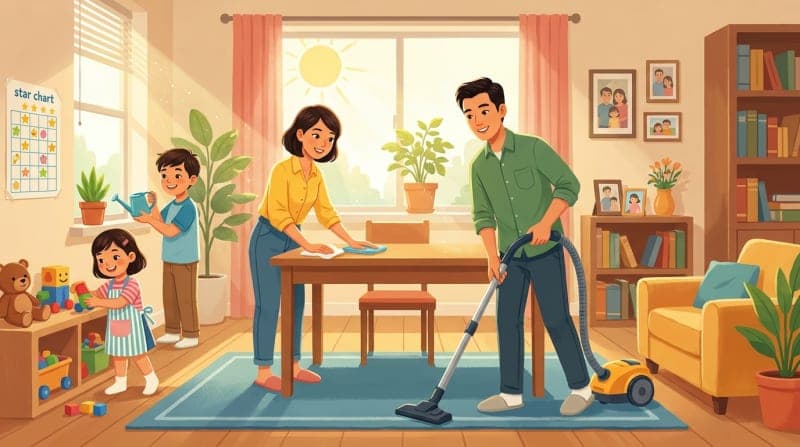
Teaching children to do housework is not just about keeping the house tidy, but about training independence, responsibility, and life skills. But more importantly, that process must be fun and fair to maintain family harmony.
Now, I don't need to shout until I'm hoarse, nor do I worry about being accused of favoritism. All of the children's efforts are transparently recorded by Tasky Kid. A tidy house, Soc and Nhim getting along—it's truly a win-win situation!
If any other parents are struggling with the scene of children "bickering" over housework, try handing over power to this "virtual assistant."
👉 Download Tasky Kid now to help your children become self-disciplined and your family happier at: https://taskykid.com
Let housework become a joy instead of a burden, parents!
🌟 Obtén Tasky Kid Ahora
¡Ayuda a tu hijo a desarrollar buenos hábitos con una app de gestión de tareas!
Descargar Gratis