Your Child Did the Chores But It's Not "Clean": Fix It or Let It Go?
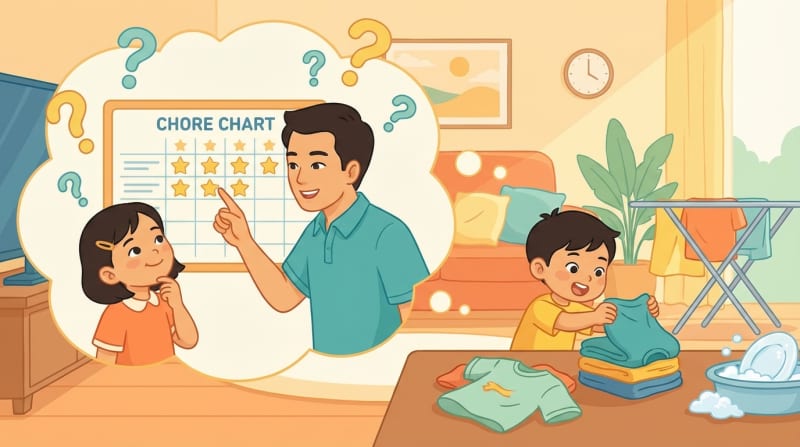
Have you ever found yourself in this "laugh-or-cry" situation: Your child eagerly volunteers to wash the dishes for you, but when you pick up a bowl, it still feels... greasy? Or when they fold the laundry, the closet looks like a tornado just passed through?
At that moment, an internal "battle" often rages in a parent's mind: Should I turn a blind eye to keep them happy, or roll up my sleeves and redo it properly?
In reality, how parents react to their child's "imperfect masterpieces" plays a huge role in shaping independence and confidence later in life. Let's dissect this issue with Tasky Kid and find a solution that offers the "best of both worlds"!
1. Four Typical Parental Reactions (Which Team Are You On?)
Before looking for a solution, let's be honest with ourselves. When you see your child doing chores below standard, what is your natural reflex?
🅰️ The "Ninja" Style: You praise your child profusely to their face, but wait until they go to sleep or go out to play, then secretly sneak in to re-wash the dishes or refold the clothes neatly.
Psychology: You're afraid of hurting their feelings, but you can't stand the mess.
🅱️ The "Micromanager" Style: You stand right next to them, pointing fingers: "This spot isn't clean yet," "That's folded wrong." You correct mistakes immediately, accompanied by a lecture on being careful.
Psychology: You want them to do it right and perfectly from the start.
🅲️ The Strict "Drill Sergeant" Style: You demand: "Do it again! You don't stop until it's squeaky clean."
Psychology: You want to instill discipline and refuse to accept sloppiness.
🅳️ The "Zen Master" Style: You turn a blind eye and let it slide. The important thing is that they have the mindset to do it; cleanliness comes later.
#TaskyKid#DayConTuLap#ParentingTips#GocPhuHuynh
🌟 Tasky Kid jetzt holen
Helfen Sie Ihrem Kind, mit einer Aufgabenmanagement-App gute Gewohnheiten zu entwickeln!
Psychology: Prioritizing the spirit of self-discipline over the result.
2. Perfectionism: The Invisible "Enemy" of Independence
We often think that fixing things for our children (Type A) or forcing them to redo it perfectly (Type B & C) is teaching them well. However, child psychologists warn that excessive perfectionism from parents can sometimes be the biggest barrier to a child's development.
Why?
Creates Dependency (For "Team Ninja"): If the child discovers that mom and dad always secretly redo their work, they will think: "It doesn't matter how I do it, Mom will fix it anyway." Over time, they lose the motivation to try to do better.
Causes Discouragement and Low Self-Esteem (For "Team Micromanager/Strict"): Being constantly criticized while trying to help makes children feel their efforts aren't recognized. Thoughts like "I'm useless, I can't do anything right" will spark, making them afraid to do chores for fear of making mistakes.
Loss of Joy in Labor: When chores turn into a strict test instead of a shared responsibility, the child will view them as a burden rather than a joy.
3. Accepting "Imperfection" - A Stepping Stone to Maturity
At Tasky Kid, we believe in the philosophy: Habits come first, skills follow.
The initial goal of teaching children to do chores is not to have a spotless, dust-free house, but to build a habit of responsibility and a spirit of self-discipline.
It is normal for a 5-year-old to wash dishes imperfectly. It is understandable for a 7-year-old to miss some dust while sweeping. The important thing is that the child proactively picked up the broom or the bowl. That is the real "victory" for parents.
Skills can be honed over time, but the love for work and self-confidence, once lost, are very hard to regain.
4. Tips for Parents to Handle the "Mess" Tactfully
So how do you balance encouraging your child with ensuring hygiene? Here are some suggestions from Tasky Kid:
Lower Your Standards (Temporarily)
Accept that "done is better than perfect." With young children, set the standard based on effort. If the child has tried their best, acknowledge that first.
Use the "Sandwich Method"
When you need to give feedback, sandwich the criticism between two compliments.
Layer 1 (Praise): "Wow, thank you for helping Mom wash the dishes, it really lightened my load."
Filling (Gentle Feedback): "But hey, this bowl still has a little soap on it. Next time, if you rinse this part a bit more, it'll be a perfect 10."
Layer 2 (Encouragement): "But overall, you were very quick, and I'm very proud."
Don't Fix It Right in Front of Them
If the clothes aren't folded beautifully, just leave them. Don't rush to refold them the moment your child turns their back (or worse, right in front of them). Wait a while, or guide them on how to do it better next time: "Mom has a secret trick to fold shirts without wrinkles, do you want to see?"
Turn Chores into a Game with Tasky Kid
Instead of nagging, use the Tasky Kid app to create motivation.
Assign specific tasks (e.g., "Fold 5 shirts").
When the child finishes (even if not perfectly), let them check the completion box themselves and receive Reward Stars ⭐.
This immediate recognition stimulates the child's brain, making them want to do better next time to get more praise.
5. Conclusion
Dear parents, raising independent children is a long journey that requires a lot of patience. Don't let an unclean bowl or a crookedly folded shirt chip away at your child's joy. Take a step back, be a little less of a perfectionist, and give your child the space to make mistakes and grow from them.
Remember: A happy and self-disciplined child is more important than a shiny clean floor.
👉 Do you want your child to do chores voluntarily without being reminded?
Download Tasky Kid now - The powerful assistant that helps parents assign tasks, award stars, and exchange gifts, turning every small chore into a big joy!