Weekend Chore Suggestions to Foster Independence by Age Group
Weekends are usually the time parents look forward to for rest after a stressful work week. However, reality often follows a familiar script: parents are busy cleaning up the "battlefield" accumulated over the week, while children are glued to the TV or iPad.
Why don't we change this script?
The weekend is not just a time for rest, but also a golden time for children to learn how to share family responsibilities. Unlike weekdays which are busy with homework and extra classes, the two days off are when children have the most relaxed mindset to try their hand at tasks requiring more time, meticulousness, and patience.
Empowering children to do chores not only helps reduce the burden on parents but is also the most effective method for teaching Life Skills. Tasky Kid would like to send parents a detailed chore "menu," designed specifically for each age group to turn weekends into meaningful Family Time.
1. Why split chores by age?
Before going into the specific list, parents need to understand that a child's physical and mental capabilities change very quickly. A task that is too difficult will discourage a 3-year-old, but a task that is too easy will make a 10-year-old feel bored.
- Safety: Ensure the child does not come into contact with chemicals or dangerous objects too early.
- Interest: Suitable work will stimulate a sense of "achievement" when the child completes it.
- Skill Development: Each age group needs to train different muscle groups and logical thinking through labor.
Here are detailed suggestions from Tasky Kid:
2. Preschool Team (3-5 years old): Learning through play
At this age, children are "imitation experts." They love doing what adults do. Therefore, turn housework into sorting games or light physical activities.
Suitable weekend tasks:
- Gathering and sorting dirty laundry:
Instead of just throwing clothes into the washing machine, teach your child how to categorize: White clothes on one side, colored clothes on the other. Or sort by owner: Dad's clothes, Mom's clothes, Baby's clothes.
- Skills learned: Color recognition, sorting logic, and orderliness.
- Dusting the TV shelf or low coffee table:
Equip your child with a soft cloth or a small feather duster. Low, safe positions are places where the baby can easily "operate."
- Skills learned: Fine motor skills, meticulous observation of dirt.
- Arranging shoes neatly at the entrance:
Weekends are when family comes and goes or guests visit. Assign your child the task of being the shoe "warehouse keeper," arranging shoes into neat pairs on the shelf.
- Skills learned: Sense of tidiness, responsibility for personal items.
💡 Tip for parents: Don't expect perfection. Praise your child's effort even if the shirt isn't folded squarely or the shoes are slightly crooked.
3. Primary School Team (6-10 years old): Capable Assistants
Entering primary school age, children have better motor skills and understand complex instructions. This is when they can participate in jobs requiring teamwork or endurance.
Suitable weekend tasks:
- Changing bed sheets with Mom to be fresh and clean:
Putting in a duvet insert or stretching a fitted sheet is quite difficult to do alone, but very fun if done by two people. The child can help mom remove old pillowcases and hold the blanket corners for mom to insert the duvet.
- Benefits: The child understands the value of a good night's sleep on a clean bed and learns how to coordinate rhythmically.
- Folding blankets neatly right after waking up:
Cultivate this habit every weekend morning, when the child doesn't have to rush to school.
- Benefits: Training self-discipline.
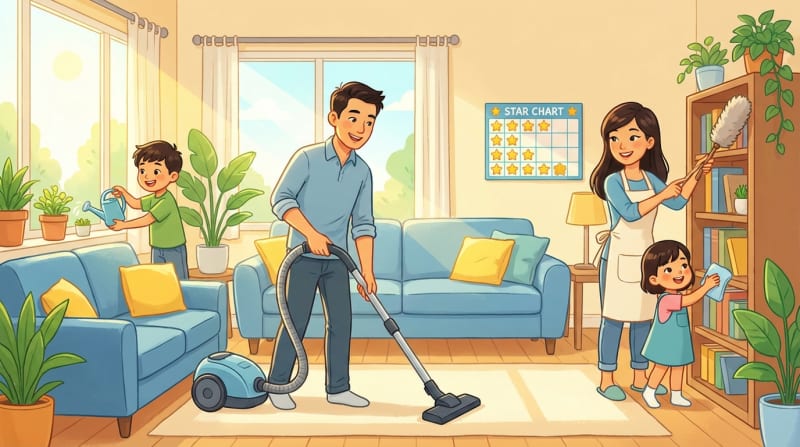
- Helping Dad wash the motorbike/car or water plants in the yard:
This is a "star" activity that most boys and girls of this age love. Being allowed to play with water, use the spray nozzle, and soap always creates excitement.
- Benefits: The child gets outdoor exercise, understands how to maintain family assets, and loves nature more.
💡 Tip for parents: Guide your child step-by-step the first time, then gradually let them take charge of the work in subsequent times.
4. Teen Team (11-15 years old): Practicing Independence
In this "awkward" age, children begin to want to assert their ego and privacy. Housework at this time is not just manual labor but preparation for independent life later on. Assign children small "projects" instead of menial errands.
Suitable weekend tasks:
- Deep cleaning and reorganizing the study corner and bookshelf:
Ask the child to self-sort books, discard unnecessary documents, and wipe the desk. A tidy space will help the child's thinking be clearer.
- Skills: Organization skills, arranging living space.
- Preparing a simple breakfast for the whole family:
On the weekend, let mom rest and let the child (possibly with dad) go into the kitchen. They can start with frying eggs, making sandwiches, or cooking noodles.
- Skills: Survival skills, planning, and caring for others.
- Mopping the floor or scrubbing the bathroom sink:
These are jobs requiring higher meticulousness and responsibility. Show the child that maintaining general hygiene is the responsibility of every member, regardless of age.
- Skills: Patience and personal hygiene standards.
💡 Tip for parents: Respect your child's method. If your child wants to listen to music while cleaning the room, agree as long as the work result meets the requirements. Trust will make teenagers cooperate better than imposition.
5. The secret to getting kids excited: "Gamification" of chores
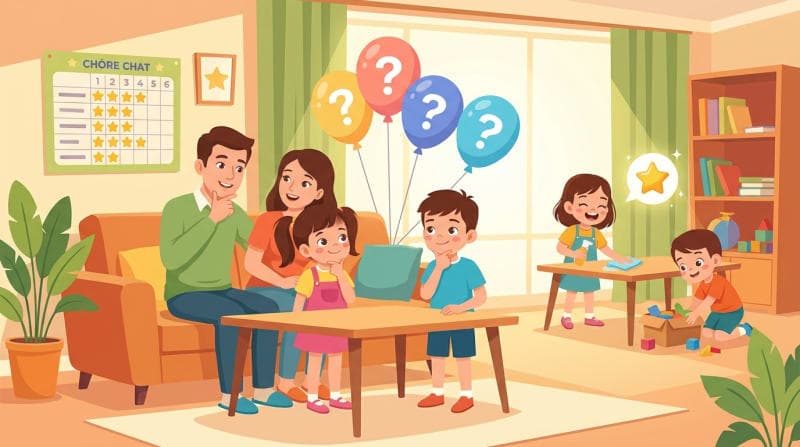
Even if the list of tasks is suitable, the biggest barrier remains the child's "chore avoidance" mentality. How to get children to volunteer without parents having to remind them until they are hoarse?
The answer is: Turn chores into a treasure hunting game.
Instead of giving orders, parents should set up "Quests" on the Tasky Kid app.
- Every time the child finishes wiping the TV shelf: +5 stars.
- Completing the car wash with Dad: +10 stars.
- Cooking breakfast independently: +20 stars.
These stars will be accumulated to exchange for practical rewards that the child desires (such as a movie outing, buying a favorite toy, or an extra 30 minutes of gaming).
This mechanism hits the child's psychology of liking to conquer and receive rewards, turning work pressure into motivation to hunt for gifts. At the same time, parents can easily track progress without having to constantly supervise.
Conclusion
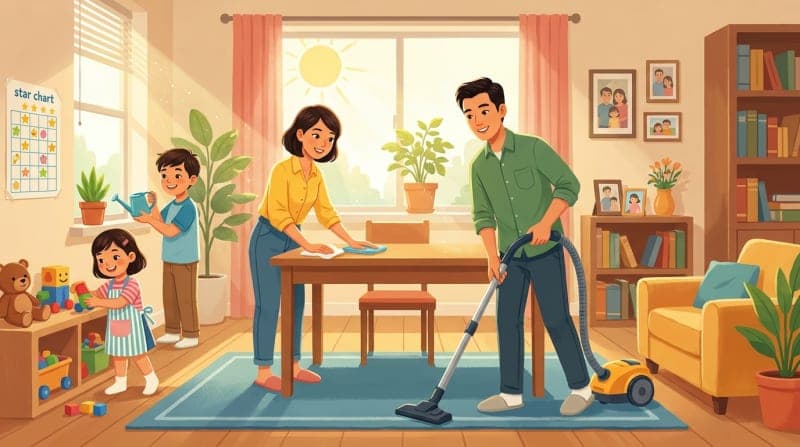
Housework should not be a punishment or burden, but an opportunity for the family to bond and for children to mature. A meaningful weekend starts from the smallest things like folding a blanket together or watering a plant together.
Parents, let's start building the chore "menu" for this week starting today!
📲 Set up a chore list, assign tasks, and set attractive rewards for your child completely free at: https://taskykid.com
Let Tasky Kid accompany parents on the journey of creating independent and happy children!
🌟 Tasky Kid jetzt holen
Helfen Sie Ihrem Kind, mit einer Aufgabenmanagement-App gute Gewohnheiten zu entwickeln!
Kostenlos herunterladen