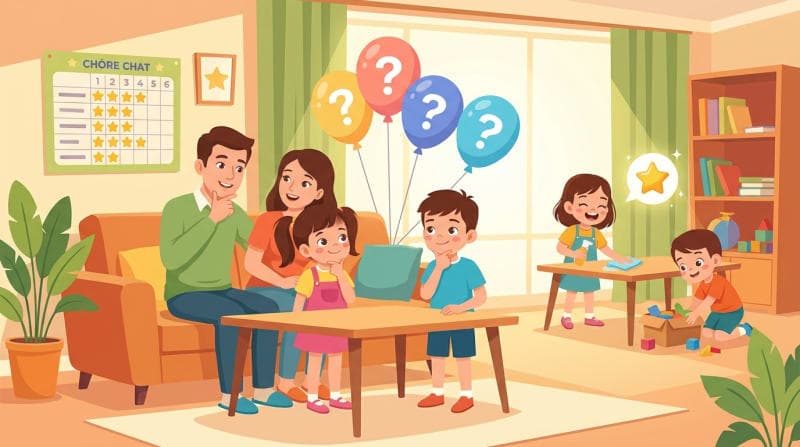
The Weekend Chore Menu: Building Independence for Every Age Group
In the hustle and bustle of modern life, the image of hectic weekday mornings is all too familiar to every family. Parents rush to get ready for work; children hastily eat breakfast to make it to school on time. In this context, teaching children to do housework is often "brushed aside" or parents just do it themselves to get it over with quickly.
However, life skills don't appear out of nowhere; they need to be cultivated day by day. If the week is too busy, then the two relaxing days of the weekend are the "golden time" for parents to restart the plan of training their children's independence. With no time pressure and no homework stress, the weekend is when the whole family can work, play, and learn from each other.
So, what tasks are suitable to assign so your child doesn't feel overwhelmed but remains excited to participate? Let's consult the scientific chore "menu" below, categorized by each stage of a child's development.
Why are weekends the best occasion for kids to "level up" their housework skills?
Before going into the details of the tasks, parents need to understand their child's psychology. Children often resist housework when they feel it is an added burden after stressful school hours. Conversely, on weekends, a child's mood is usually more relaxed.
- Room for error: When teaching a child a new skill, they will inevitably make mistakes or be slow. The weekend allows parents enough time and patience to guide them again without yelling due to fear of being late.
- Family bonding: Doing housework together is a great form of "team building" right at home.
- Building habits: Repetition every weekend will create a solid family routine.
Stage 1: Warm-up (3-5 years old) - Learning through Play
At preschool age, children are like little "photocopy machines"; they love to observe and mimic the actions of adults. This is the stage to build joy in labor rather than focusing on perfect results.
Assign your child simple tasks that help train fine motor skills and observation abilities:
🌟 Tasky Kid jetzt holen
Helfen Sie Ihrem Kind, mit einer Aufgabenmanagement-App gute Gewohnheiten zu entwickeln!
Kostenlos herunterladen