The Power of "Small Wins" in Building Independence for Your Child | Tasky Kid
💪 MotivationThursday, January 01, 2026|769 Ansichten
The Power of "Small Wins" in Building Independence for Your Child
Hello wise parents,
Have you ever woken up on a Monday morning with high determination: "This week must be different! My child must wake up on time, eat breakfast quickly, go to school happily, and study voluntarily in the evening!"? But then, reality throws a bucket of cold water on you after just a few hours: whining, procrastination, and endless debates about who will clean up the toys.
Mondays often arrive with an invisible pressure that the whole family must start the new week productively, orderly, and perfectly. We look at the long list of things our children "must do" to be "good kids" and feel exhausted and helpless when they don't cooperate.
But parents, changing habits or shaping a child's character isn't a 100-meter sprint; it is an enduring marathon. Instead of trying to change everything at once, why don't we try a different tactic this week? That is focusing on "Small Wins".
The Trap of "Perfection" and Invisible Pressure
When we set too many expectations and require children to perform a series of difficult tasks right from the start of the week, we inadvertently create a huge psychological barrier for them.
Overwhelm: A to-do list that is too long makes children feel the mission is impossible. "There's too much to do, how can I finish it all?" – this thought easily leads to a mindset of giving up.
Feeling of failure: If a child does 9 things well but forgets just 1, and parents only focus on that mistake, the child will feel their efforts are not recognized.
Family conflict: Parental pressure meeting a child's resistance creates a tense atmosphere, turning the home into a "battlefield" instead of a sanctuary.
Instead of aiming for immediate perfection, positive parenting encourages parents to break down goals so children can easily conquer them.
In behavioral psychology, small wins possess power far greater than their modest appearance suggests.
1. Activating the brain's reward system
Whenever a child completes a task and is acknowledged, the brain releases Dopamine – the hormone of happiness and motivation. The feeling of "Ah, I did it!" urges the child to repeat that action to continue enjoying the feeling of success.
2. Building confidence
A child's confidence doesn't come from moral lectures, but from real-life experiences of their own competence. When a child puts their clothes in the hamper and is praised by Mom, they understand they have the ability to take care of themselves. These small successes accumulate to create a confident child who dares to face bigger challenges.
3. Creating momentum for sustainable habits
A good habit is built from a chain of small, repeated actions. Starting gently helps children feel less forced, thereby minimizing resistance and increasing self-discipline.
Suggestions for "Small Wins" This Week
This week, instead of demanding your child to be "Perfectly obedient," try choosing 1-2 small, specific goals to focus on. For example:
Instead of:"You must clean your room until there isn't a speck of dust!"
Try:"Please put your dirty clothes in the hamper after your shower."
Instead of:"You must sit and study seriously for 2 whole hours!"
Try:"Sit at your desk at exactly 7:30 PM (even if you only focus for the first 15 minutes)."
Instead of:"You must be polite to everyone, everywhere, at all times."
Try:"Say one 'thank you' when Mom finishes cooking or when someone helps you."
These tasks sound simple, but they are the extremely solid first bricks for a foundation of future discipline.
Tasky Kid: Turning Recognition into "Sparkling Stars"
The golden rule of parenting is: Recognition must be timely.
If a child does well on Monday morning but isn't praised until Saturday night, that praise has lost 90% of its effect. Children live in the present, and they need immediate feedback.
This is where Tasky Kid becomes a powerful assistant for parents:
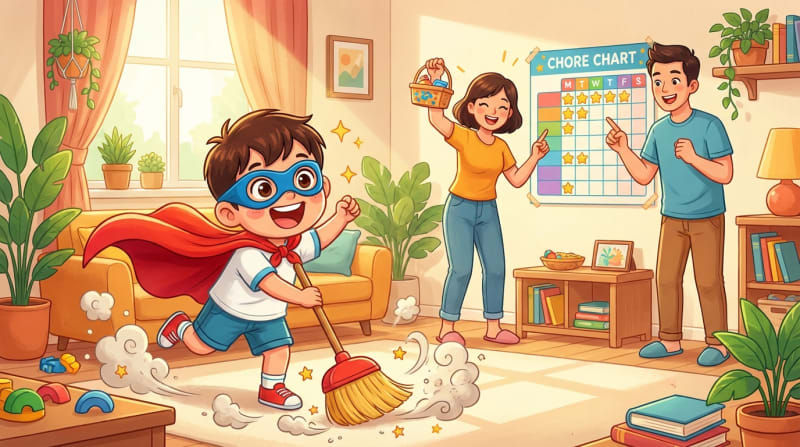
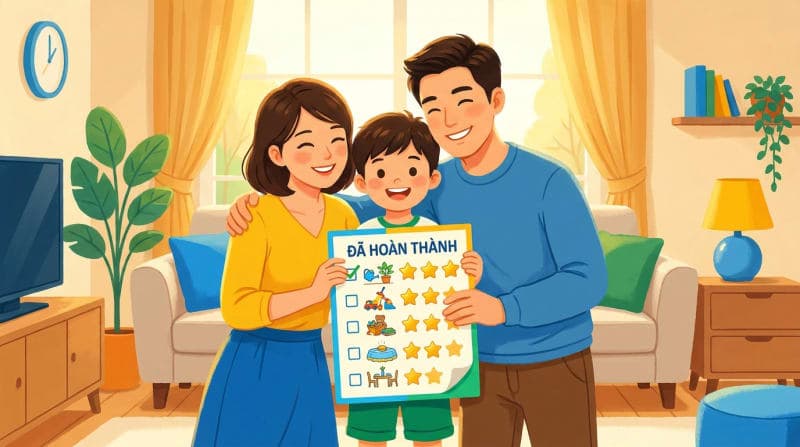
Immediate Recognition: Whenever your child completes a "small mission" (like brushing teeth, cleaning up toys), parents can instantly award a star ⭐ on the app. Fun sounds and visual effects help the child feel the joy of victory immediately.
Concretizing Goals: Tasky Kid helps parents set up clear tasks. The child will know exactly what they need to do to earn stars, avoiding the vague confusion of not knowing what "being good" means.
Motivation to Exchange Gifts: Accumulated stars aren't just for looking at. Parents can work with their children to set up rewards (like 30 minutes of TV, a trip to the bookstore, or a favorite toy). This teaches the lesson of effort and reward.
Conclusion: Let the New Week Start with Joy
Dear parents,
Raising smart and independent children is a long journey requiring a lot of patience. Don't let the invisible pressures of Monday blur the joy of accompanying your child as they grow.
Lower your expectations of "perfection" a little, and heighten your sensitivity in recognizing the smallest efforts of your child. Parental recognition is the best mental "boost," helping children feel capable, loved, and eager to do even better tomorrow.
Let the new week begin with laughter when your child boasts, "Mom, I got a star!", rather than with tired sighs.
Download the app and hunt for the first stars with your child today:
👉 Download Tasky Kid here
Tasky Kid - The app that helps children build good habits and practice life skills through positive parenting methods.
🏠 Weekend
🏠 Giao việc nhà cuối tuần sao cho "chuẩn bài" để con vui vẻ hợp tác m