Age-Appropriate Chores: Kids Take Initiative, Moms Stay Stress-Free
Weekends are often the most conflicting time of the week for parents. On one hand, you want to rest and "chill" after a stressful work week. On the other hand, looking at a messy house with piles of unfolded laundry, dusty floors, and scattered toys, it's easy for your stress levels to spike.
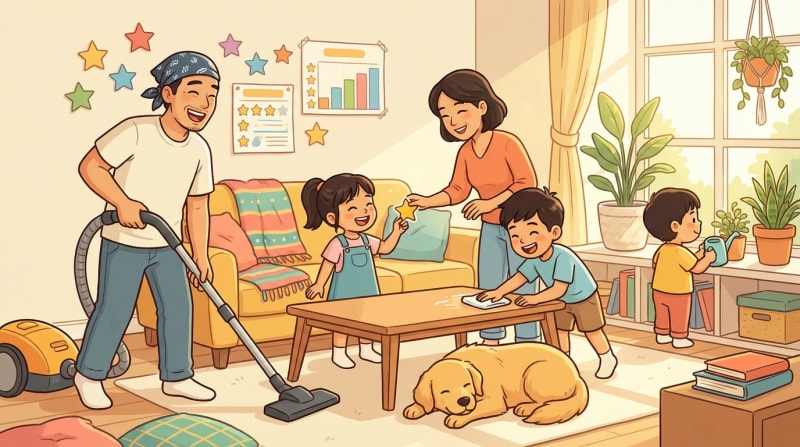
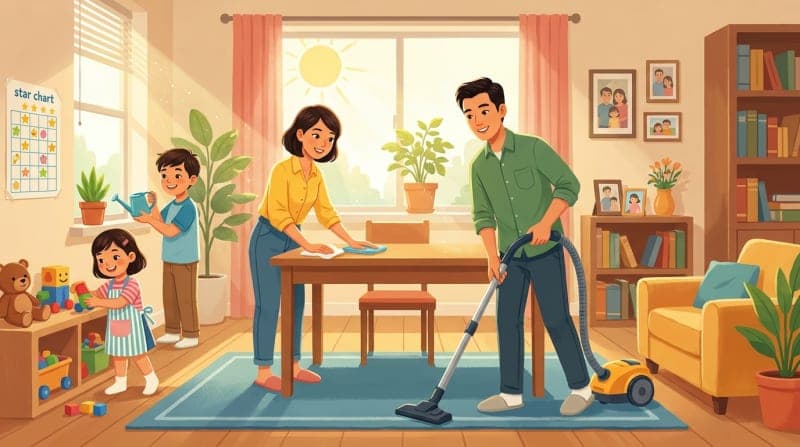
Many parents choose to "do it themselves to be quick" or hire help just to get it over with. However, child psychology experts agree: Housework is the best early school for responsibility and gratitude. Instead of taking on everything yourself, why not turn cleaning time into a fun "team building" activity for the whole family?
The key lies in assigning tasks suitable for the child's age. When the work is manageable, children feel more excited and confident upon completion. Below is a detailed and scientific "chore menu" to help parents train their children to be independent from a young age.
1. Preschool Group (3-5 years old): Warming Up with Games
At this age, children love mimicking adults and always want to be recognized as a "good baby." The goal of this stage is not perfect cleanliness, but building habits of tidiness and the joy of labor.
List of suitable tasks:
Gathering toys: This is the most basic task. Parents should prepare toy baskets with labels or different colors for children to sort (e.g., a basket for teddy bears, a basket for cars).
Arranging shoes: Ask the child to place their shoes and their parents' shoes neatly on the shelf every time they come home or when tidying up the shoe cabinet.
Simple dusting: Equip the child with a small cloth or a mini feather duster to wipe coffee tables, low chairs, or shelves within reach.
Putting dirty clothes in the basket: Teach the child to distinguish between clean clothes and those that need washing, and to put them in the designated place.
#TaskyKid#ViecNhaCuoiTuan#DayConTuLap#KyNangSong
🌟 Tasky Kid jetzt holen
Helfen Sie Ihrem Kind, mit einer Aufgabenmanagement-App gute Gewohnheiten zu entwickeln!
Turn chores into a game. For example: "Let's see who can pick up more red Legos and put them in the basket faster!" or play a fun song and challenge the child to finish cleaning before the song ends. Don't forget to praise them enthusiastically every time they finish, even if the result isn't as tidy as you'd like.
2. Primary School Group (6-10 years old): Training Dexterity
Entering primary school, children's fine motor skills and ability to focus have developed better. This is the golden stage to train meticulousness, patience, and the sense of contributing to the family collective.
List of suitable tasks:
Folding clothes: Start with easy-to-fold items like face towels, socks, and t-shirts. Then gradually upgrade to long pants.
Vacuuming and sweeping: Children can be in charge of vacuuming the living room, sweeping the yard, or wiping the stairs. This task helps children clearly see the "before and after" results.
Changing bed linens: Putting on pillowcases or spreading bed sheets helps children train hand strength and coordination.
Setting the table: Arranging bowls and chopsticks, and wiping the table before and after eating.
Watering plants: Taking care of indoor plants or those on the balcony according to a fixed schedule.
💡 Tips for parents:
At this age, children start to compare or get lazy. Be patient and guide them in detail (model it for them) the first few times. Don't criticize if they don't clean perfectly; gently show them where the dust is still left so they can do it again. Your trust is their biggest motivation.
3. Teen Group (11-15 years old): Developing Real-World Life Skills
This is the preparation stage for complete independence in the future. Tasks need to be of higher responsibility, requiring initiative and problem-solving skills. Parents should treat their children as "partners" in household management rather than just kids running errands.
List of suitable tasks:
Detailed house cleaning: Mopping the entire floor, scrubbing the bathroom sink, cleaning windows, or cleaning the refrigerator.
Washing dishes: Being in charge of washing dishes after dinner or loading/unloading the dishwasher.
Managing the study corner: Organizing bookshelves, cleaning the desk, and sorting out unused papers/study materials.
Simple cooking: Can prepare breakfast, cook rice, or prep ingredients to help mom.
Operating the washing machine: Knowing how to sort clothes, pour detergent, and select the appropriate washing mode.
💡 Tips for parents:
Respect your child's schedule. In the teenage years, school schedules and friendships are very important. Instead of ordering "Do it now!", agree on a completion deadline. For example: "Remember to clean your room before 5 PM". This helps children learn time management.
4. The Secret to Kids "Accepting the Job" Voluntarily Without Yelling
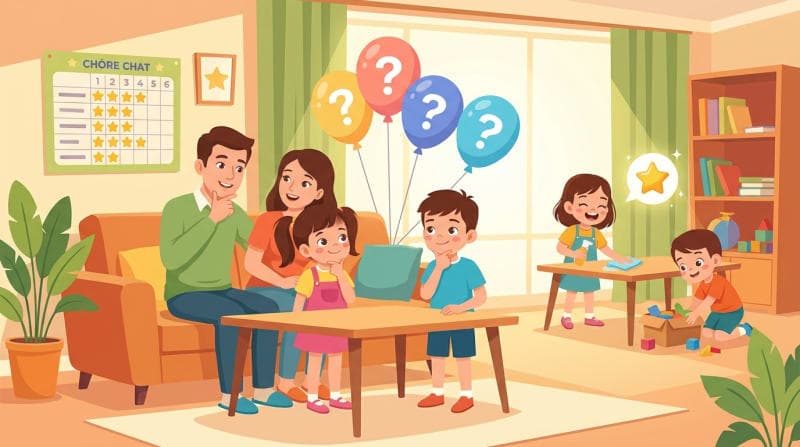
The biggest headache isn't that children can't do it, but that they won't do it. Repeated nagging only makes the family atmosphere stressful and makes children immune to their parents' words.
The smart solution in the 4.0 era is applying Gamification to housework. Turn every task into a "game quest" with worthy rewards.
Applying technology with Tasky Kid:
Instead of using a dry paper chart, parents can use the Tasky Kid app to manage chores in an intuitive and fun way:
Set up the Chore "Menu": Enter tasks (as suggested above) into the app.
Valuation with Stars: Each job corresponds to a different number of stars (reward points) depending on the difficulty. For example: Folding clothes = 2 stars, Scrubbing the toilet = 5 stars.
Reward Exchange Mechanism: This is the part kids love the most! Parents and children agree on a "reward store."
50 stars = A trip to the cinema.
30 stars = 1 hour of extra gaming/TV on the weekend.
20 stars = A small toy or bubble tea.
Seeing the accumulated stars increase every day on the phone/tablet gives children the motivation to voluntarily complete tasks to achieve their goals without parents needing to remind them. This is the most basic way to teach children about the value of labor and financial management.
Conclusion
Weekends are for love, not for cold wars over housework. Let go of perfectionism, empower your children, and turn cleaning hours into bonding moments for your "junior squad." A house might not be sparkling clean, but a home full of laughter and sharing is the happiest home.
Are you ready to set up a smart chore empire for your family?
👉 Download Tasky Kid now and start the journey of training your child to be independent at:https://taskykid.com
🏠 Weekend
🏠 Giao việc nhà cuối tuần sao cho "chuẩn bài" để con vui vẻ hợp tác m